
Why Hong Kong Startups Are Losing the War for Tech Talent (And How to Fight Back)
The city’s tech scene is buzzing with opportunity, but there’s a problem. Companies can’t find the people they need to grow. Developers, data scientists, and engineers are in short supply, and the gap is widening every quarter.
Hong Kong’s tech talent shortage stems from limited local supply, aggressive regional competition, and outdated hiring practices. Startups lose candidates to Singapore and mainland China, where salaries and perks outpace local offers. Solving this requires rethinking compensation, building employer brands, upskilling existing teams, and tapping into overlooked talent pools like career switchers and remote workers from neighboring markets.
Why skilled developers are leaving Hong Kong
The numbers tell a stark story. Tech professionals are moving to Singapore, Shenzhen, and even Sydney at rates not seen in years. Salaries abroad often exceed local offers by 30 to 40 percent, and benefits packages include equity, flexible work arrangements, and career development budgets that Hong Kong firms struggle to match.
But money isn’t the only factor. Many engineers cite limited growth opportunities within smaller local startups. They want to work on products that scale globally, not just regionally. When a company in Singapore offers both higher pay and a chance to build infrastructure for millions of users, the choice becomes obvious.
The pandemic accelerated remote work acceptance across Asia. Developers now realize they can earn Singapore salaries while living in lower cost cities. This shift fundamentally changed how talent evaluates opportunities. Location matters less when the work happens on Zoom and Slack.
Political uncertainty also plays a role, though it’s rarely the sole driver. Professionals weigh stability, career trajectory, and quality of life. When peers share stories of better conditions elsewhere, the cumulative effect pushes people toward the exit.
The real cost of empty desks
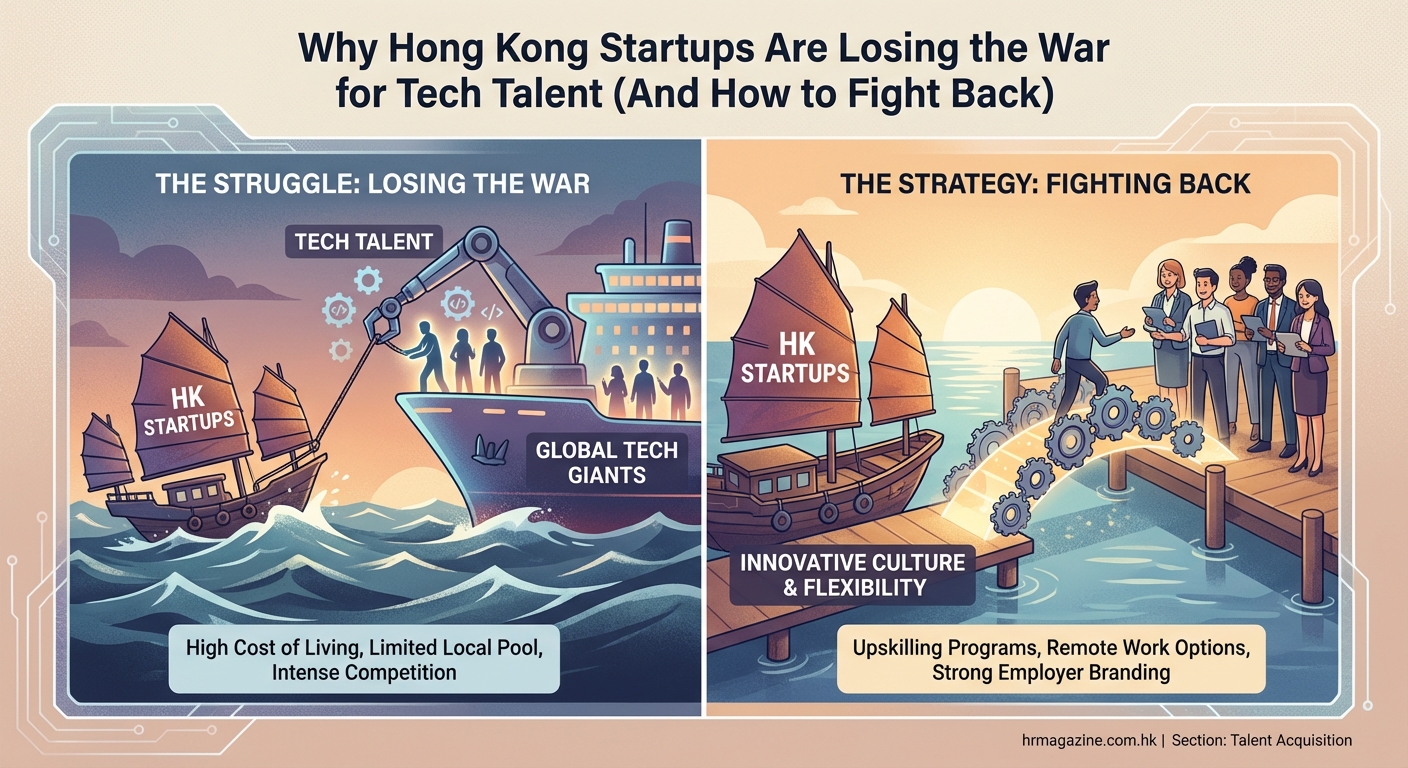
Every unfilled engineering role delays product launches by weeks or months. Startups miss funding milestones because they can’t demonstrate technical progress. Existing team members burn out covering gaps, which creates a vicious cycle of turnover.
Revenue suffers too. A fintech company that can’t hire backend developers can’t launch new features. Competitors who solve hiring faster capture market share. The opportunity cost compounds over time, turning a short term hiring problem into a long term competitive disadvantage.
Founders spend hours each week interviewing candidates who eventually decline offers. That time could go toward customer development, fundraising, or strategy. The hidden cost of talent scarcity shows up in delayed decisions and missed opportunities that never make it into financial statements.
What makes Hong Kong’s situation different
Unlike Singapore, Hong Kong doesn’t have government sponsored programs that actively import tech talent at scale. Immigration processes take longer, and visa approvals for specialized roles involve more bureaucracy. Companies in Singapore can hire foreign engineers and get them working within weeks. Here, the timeline stretches to months.
The local university system produces fewer computer science graduates per capita than competing cities. Enrollment in technical programs hasn’t kept pace with industry demand. By the time students graduate, regional competitors have already recruited the top performers through internship pipelines.
Cultural factors matter too. Hong Kong’s professional culture traditionally valued finance, law, and consulting over engineering. Parents steered children toward these fields for decades. Shifting this perception takes years, and in the meantime, the talent pipeline remains narrow.
The cost of living creates another challenge. Developers compare their purchasing power across cities. A $80,000 salary in Hong Kong buys less housing and lifestyle than the same amount in Taipei or Bangkok. Smart candidates run these calculations before accepting offers.
How startups can fight back
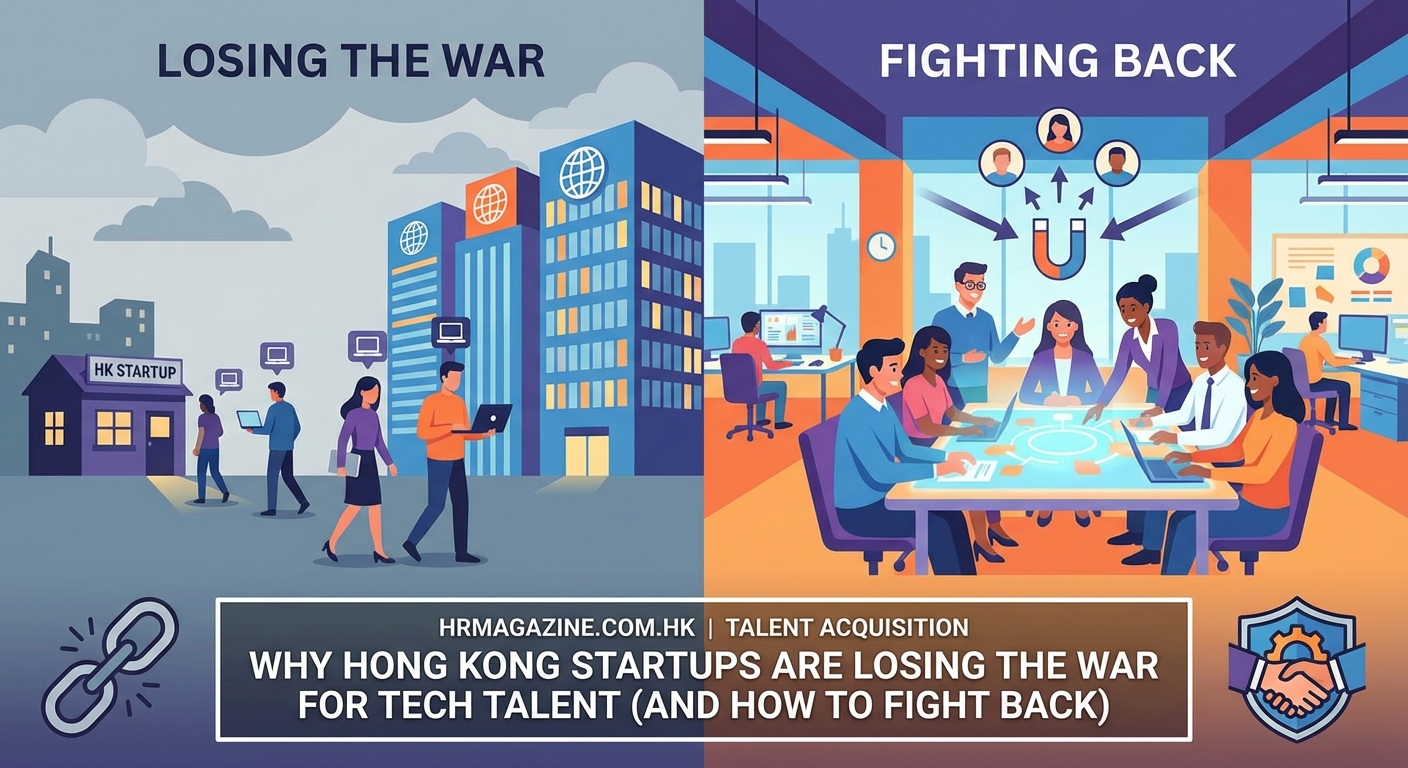
Winning the talent war requires creativity, not just bigger budgets. Here are strategies that work for resource constrained companies.
Build a compelling employer brand
Most Hong Kong startups have weak online presences. Their websites lack engineering blogs, team photos, or clear descriptions of technical challenges. Candidates research companies on LinkedIn, Glassdoor, and GitHub before applying. An empty profile signals a company that doesn’t value its people.
Start publishing content that showcases your technical work. Write about architecture decisions, performance optimizations, or interesting bugs your team solved. Developers want to see what problems they’ll tackle, not generic marketing copy.
Feature team members in videos and blog posts. Let engineers explain projects in their own words. This builds authenticity and helps candidates imagine themselves in those roles. A five minute video of your CTO discussing the tech stack does more than a dozen job postings.
Participate in local tech communities. Sponsor meetups, host workshops, or contribute to open source projects. Visibility in these spaces builds credibility. When developers see your team engaging with the community, they perceive you as a real player, not just another startup.
Rethink compensation structures
Cash constrained startups can’t always match big tech salaries, but they can offer equity that becomes valuable. The key is explaining this clearly. Most candidates don’t understand how stock options work or what they could be worth.
Create simple models that show potential outcomes. If the company hits its growth targets, what could those options be worth in three or five years? Use real examples from successful exits to make it concrete. Transparency builds trust and helps candidates evaluate the full package.
Consider performance bonuses tied to milestones. A developer who ships a major feature gets a bonus within weeks, not months. Immediate rewards feel more tangible than distant equity payouts. This also aligns incentives with company goals.
Offer learning and development budgets. Give each engineer $2,000 annually for courses, conferences, or certifications. This costs less than a salary bump but signals investment in their growth. Many developers value skill development as much as cash, especially early in their careers.
Tap into overlooked talent pools
Not every role needs a computer science degree from a top university. Career switchers from finance, design, or operations often bring valuable perspectives. They understand business context better than fresh graduates and learn technical skills faster than expected.
Bootcamp graduates represent another underutilized group. These programs produce job ready developers in months, not years. While they lack traditional credentials, they often show stronger motivation than university graduates who drifted into CS programs.
Women remain underrepresented in Hong Kong tech. Companies that actively recruit female developers access a less competitive talent pool. This requires examining hiring practices for unconscious bias and creating inclusive work environments, but the payoff is substantial.
Consider remote workers from nearby cities. A developer in Guangzhou or Taipei can work Hong Kong hours without relocating. This expands your candidate pool dramatically while keeping costs reasonable. Remote work infrastructure is now mature enough to make this seamless.
Invest in upskilling current employees
Your best talent pipeline might already be on the payroll. That project manager who asks smart technical questions could become a product engineer with six months of training. The customer success person who writes SQL queries for fun might thrive as a data analyst.
Create internal apprenticeship programs. Pair interested employees with senior engineers for structured learning. Set clear milestones and dedicate time for education during work hours. This shows you’re serious about development, not just asking people to learn on weekends.
Rotate people through different roles. A frontend developer who spends a quarter working on backend systems becomes more versatile. This cross training reduces key person risk and keeps work interesting. Boredom drives turnover as much as low pay.
Promote from within whenever possible. External hires for senior roles demoralize existing team members who feel overlooked. When people see a clear path from junior to senior to lead, they stick around longer. Retention is cheaper than replacement.
Common hiring mistakes that drive candidates away
Even companies with good intentions sabotage themselves through poor practices. Here’s what to avoid.
| Mistake | Why It Hurts | Better Approach |
|---|---|---|
| Slow interview processes | Candidates accept other offers while you deliberate | Make decisions within one week of final interview |
| Generic job descriptions | Top talent ignores posts that could apply to any company | Describe specific projects and technologies used |
| Lowball initial offers | Signals you don’t value their skills | Research market rates and offer competitively from the start |
| Lack of interview feedback | Candidates feel disrespected and share experiences online | Provide brief, constructive feedback to everyone |
| Too many interview rounds | Excessive process suggests bureaucracy and indecision | Limit to three rounds maximum for most roles |
| No clear growth path | Ambitious developers want to know where they’re headed | Outline potential career progression during interviews |
The role of flexibility in retention
Rigid 9 to 6 office schedules feel outdated to most developers. They’ve experienced remote work and flexible hours. Companies that demand daily office presence lose candidates to more accommodating competitors.
Trust matters more than surveillance. Developers deliver results through code, not hours at a desk. Measure output, not input. When people feel trusted, they work harder and stay longer.
Offer real flexibility, not just token gestures. Two work from home days per week isn’t impressive anymore. Consider fully remote roles or results only work environments where people choose their own schedules as long as they hit deadlines.
Family friendly policies attract talent at different life stages. Parents value companies that accommodate school pickups and sick kids. These policies cost little but build tremendous loyalty. A developer who can attend their child’s school play without guilt will remember that when recruiters call.
Building technical teams without deep pockets
Resource constraints force creativity. Here’s a practical framework for startups with limited budgets.
-
Define your must have skills precisely. Don’t ask for five years of experience when two will do. Every extra requirement shrinks your candidate pool. Focus on core competencies and teach the rest.
-
Hire for potential over pedigree. A hungry developer from a lesser known school often outperforms a bored one from a top university. Look for curiosity, problem solving ability, and willingness to learn.
-
Create a compelling three month onboarding plan. Show candidates exactly how you’ll help them succeed. This reduces perceived risk and demonstrates organizational maturity.
-
Leverage your network ruthlessly. Employee referrals convert at higher rates than cold applications. Offer meaningful referral bonuses and make it easy for team members to share opportunities.
-
Partner with coding bootcamps and universities. Offer internships that convert to full time roles. This builds a pipeline of people who already understand your company and product.
-
Be honest about challenges. Don’t oversell the role or hide problems. Developers appreciate transparency and will work harder when they know what they’re getting into.
What the data reveals about Hong Kong’s talent gap
Recent surveys show 68 percent of Hong Kong tech companies report difficulty filling technical roles. This number has climbed steadily since 2020, with no signs of improvement.
The average time to fill a senior developer position now exceeds 90 days, up from 45 days three years ago. Companies interview more candidates but make fewer hires. This suggests either rising standards or misalignment between what companies offer and what candidates expect.
Salary expectations have increased 25 percent since the pandemic began, while actual salary budgets grew only 12 percent. This gap creates tension in negotiations and leads to more failed offers.
Turnover rates in tech roles average 22 percent annually, nearly double the rate for other professional sectors. Developers switch jobs more frequently, making retention as important as recruitment.
“The companies winning the talent war aren’t necessarily the ones with the biggest budgets. They’re the ones that make developers feel valued, give them interesting problems to solve, and create environments where they can do their best work. Culture beats compensation more often than founders realize.”
Regional competition keeps intensifying
Singapore continues to attract Hong Kong’s best developers with aggressive recruitment and streamlined immigration. The city state’s tech sector grew 30 percent last year, creating thousands of new roles. Their government actively supports tech companies through grants, tax incentives, and talent programs.
Mainland Chinese tech hubs offer different advantages. Shenzhen and Hangzhou provide exposure to massive user bases and cutting edge projects. Developers who want to work on AI, fintech, or consumer apps at scale often look north. The technical challenges and learning opportunities exceed what most Hong Kong startups can provide.
Even smaller Southeast Asian cities now compete effectively. Bangkok, Kuala Lumpur, and Manila have growing startup ecosystems with lower costs and improving quality of life. Remote work makes these locations viable for developers who previously needed to be in major hubs.
Practical steps you can take this month
Waiting for market conditions to improve won’t solve your hiring problems. Here are actions you can implement immediately.
- Audit your current job postings for unnecessary requirements and corporate language. Rewrite them to sound human and highlight what makes your team special.
- Schedule coffee chats with developers at other startups. Learn what attracted them to their current roles and what would make them consider switching.
- Create a simple referral program for your existing team. Offer bonuses for successful hires and make the process easy.
- Start a technical blog or newsletter. Publish one post this month about an interesting problem your team solved.
- Review your interview process. Cut any steps that don’t directly assess relevant skills or cultural fit.
- Research market salary data for your key roles. Be honest about whether your offers are competitive.
Why some startups succeed despite the shortage
A handful of Hong Kong startups consistently attract strong technical talent despite the challenging market. What do they do differently?
They treat hiring as a core competency, not an HR function. Founders spend significant time on recruitment, recognizing it as essential to company success. They personally reach out to candidates, conduct interviews, and close offers.
These companies build in public. They share their journey, challenges, and wins through blogs, social media, and community events. This transparency attracts people who want to be part of something real, not polished corporate theater.
They offer meaningful work. Developers join because they believe in the mission and want to solve the specific problems the company tackles. Purpose driven recruitment works better than generic pitches about “changing the world.”
They invest in their people from day one. Onboarding is structured and thoughtful. Mentorship is real, not just assigned on paper. Career development happens through regular conversations, not annual reviews.
Making Hong Kong work for your team
The talent shortage is real, but it’s not insurmountable. Companies that adapt their strategies, invest in their people, and build compelling cultures can still win. The key is accepting that old playbooks don’t work anymore.
Stop competing solely on salary. You’ll lose that battle to better funded competitors. Instead, compete on mission, culture, growth opportunities, and flexibility. These factors matter more to many developers than an extra $10,000 in base pay.
Think long term about talent development. The developer you hire today at a junior level could become your CTO in five years. Invest in their growth and they’ll invest in your company. This patience pays off through loyalty and institutional knowledge.
Remember that every market has constraints. Singapore has high costs and intense competition. Mainland China has regulatory complexity and cultural differences. Hong Kong offers stability, international exposure, and access to regional markets. Play to these strengths rather than fighting your weaknesses.
The startups that thrive will be those that treat people as their most important asset, not just another line item in the budget. Build a place where talented developers want to work, and the talent shortage becomes someone else’s problem.