
Why Hong Kong Employees Are Quiet Quitting and What HR Can Do About It
Millennials in Hong Kong are showing up to work, but many have already checked out mentally. They complete their assigned tasks, leave on time, and refuse to go the extra mile. The phenomenon has a name: quiet quitting. And it’s reshaping how HR teams need to think about employee engagement, performance management, and workplace culture across the city.
Quiet quitting in Hong Kong affects nearly half of millennials who feel undervalued, undertrained, and disconnected from their employers. The trend stems from rigid work arrangements, poor manager relationships, and limited career development. HR leaders can reverse disengagement by offering flexible work options, investing in training, and rebuilding trust through transparent communication and genuine recognition.
Understanding quiet quitting in Hong Kong’s workplace
Quiet quitting doesn’t mean employees hand in resignation letters. Instead, they do the bare minimum required by their job descriptions. No extra projects. No volunteering for committees. No staying late to help a colleague.
Recent data shows 45% of Hong Kong millennials admit to this behavior. They’re not lazy. They’re responding to what they perceive as broken promises from employers.
The reasons are specific to Hong Kong’s work culture. Long hours have been normalized for decades. Face time at the office still matters in many organizations. Promotions often favor those who visibly sacrifice personal time. But younger workers are rejecting this social contract.
They watched their parents burn out. They see property prices that make homeownership nearly impossible regardless of overtime hours. And they question whether loyalty to a company will be reciprocated when economic conditions shift.
Why millennials are disengaging from work
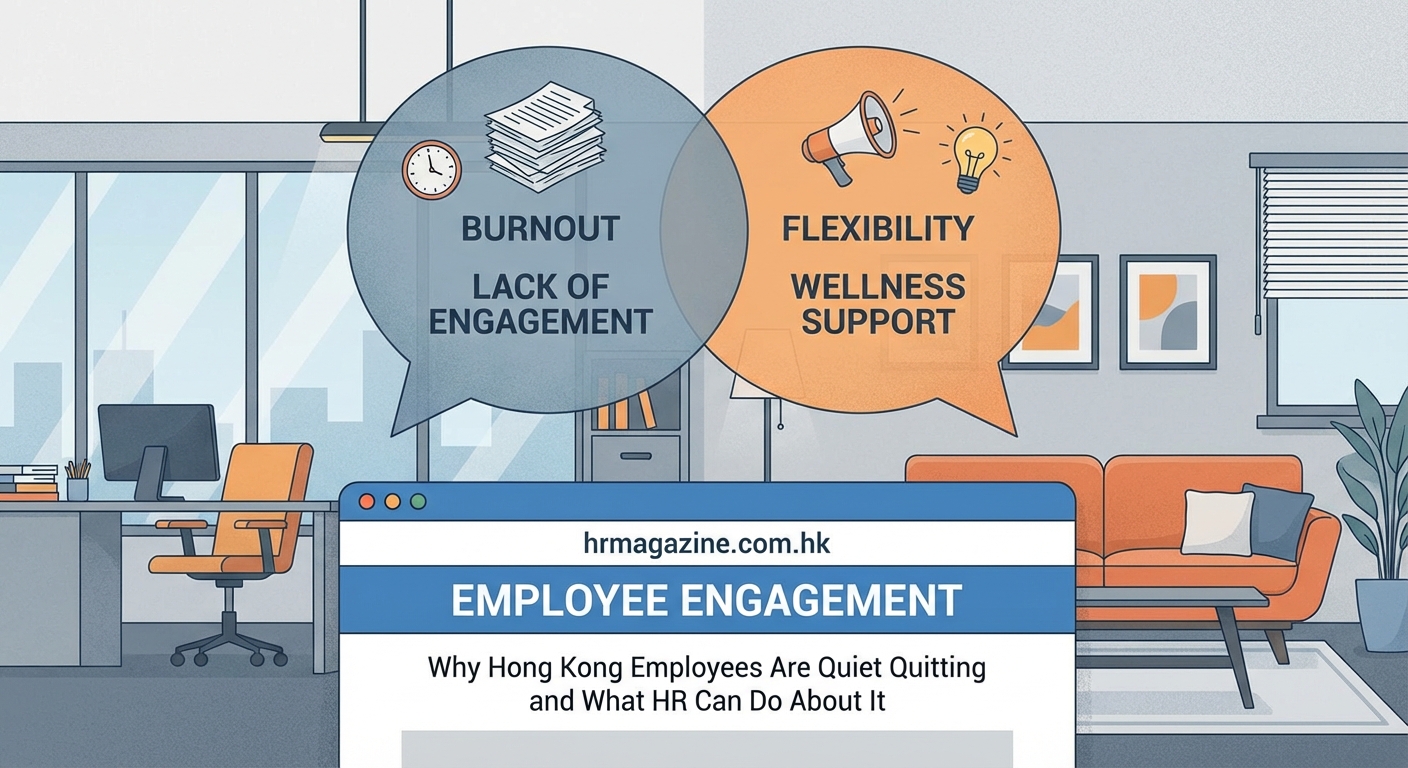
Three factors drive quiet quitting among Hong Kong employees.
Lack of flexibility tops the list. Over half of workers say they would quietly quit if denied hybrid work options. The pandemic proved remote work functions well for many roles. Forcing everyone back to the office five days a week feels arbitrary and controlling.
Training gaps create frustration. A third of millennials doubt their employers will invest in skills development. Technology changes rapidly. AI tools are transforming job functions. Employees who don’t receive training feel left behind and undervalued.
Manager relationships matter more than perks. Employees don’t leave companies. They leave bad managers. When supervisors micromanage, fail to provide clear feedback, or take credit for team accomplishments, trust evaporates.
Financial stress amplifies these issues. More than 80% of Hong Kong workers believe better financial wellness support would improve their productivity. When people worry about rent, debt, or supporting aging parents, work becomes purely transactional.
The cost of disengagement for Hong Kong businesses
Quiet quitters stay on payroll but deliver minimum value. That creates hidden costs.
Productivity drops when employees refuse discretionary effort. Projects that could finish early drag on. Innovation stalls because no one volunteers creative ideas. Customer service becomes mechanical rather than helpful.
Team morale suffers. Engaged employees notice when colleagues coast. They pick up slack initially, but resentment builds. Eventually, disengagement spreads like a virus through departments.
Turnover increases over time. Quiet quitting often serves as a transitional phase. Employees mentally check out while passively job hunting. When the right opportunity appears, they leave. Replacement costs in Hong Kong average 50% to 200% of annual salary depending on role seniority.
Employer brand takes a hit. Disengaged employees share their experiences on platforms like Glassdoor and LinkedIn. Negative reviews make attracting top talent harder, especially in competitive sectors where recruiting challenges already exist.
Five strategies to address quiet quitting
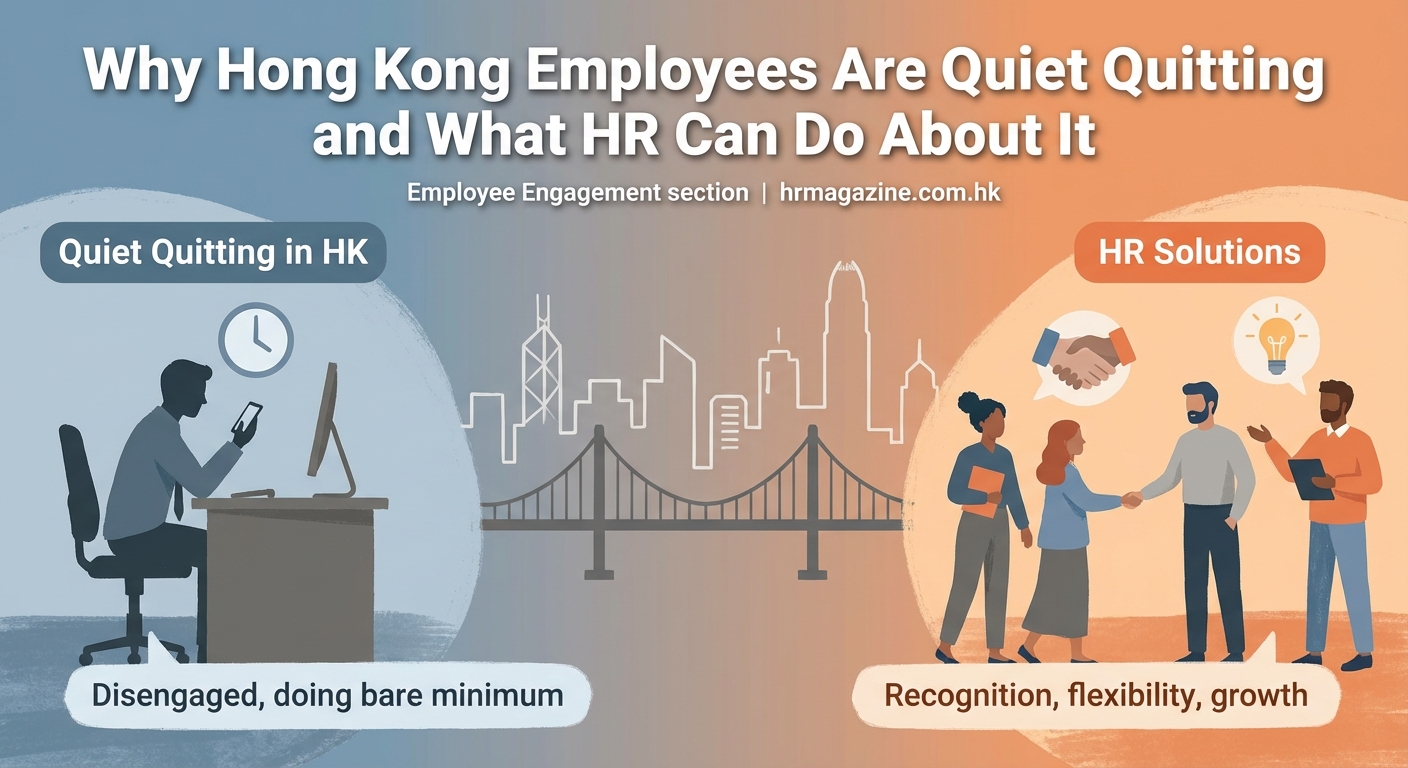
HR leaders can reverse this trend with deliberate action. Here’s how.
1. Implement genuine flexible work policies
Flexibility means more than allowing occasional work from home. Create clear guidelines that give employees control over when and where they work, within reasonable boundaries.
Define core collaboration hours when teams need to be available. Outside those windows, trust people to manage their schedules. Measure output and results rather than hours logged.
Some roles require physical presence. Be transparent about why. Manufacturing floor supervisors can’t work remotely. But their administrative tasks might happen from anywhere. Break jobs into components and identify what truly needs office time.
2. Invest in continuous learning
Training shouldn’t be a checkbox exercise. Build personalized development plans for each employee.
Start with skills gap assessments. What does the employee want to learn? What does the business need? Where do those interests overlap?
Offer multiple learning formats. Some people prefer instructor-led courses. Others learn better through online modules, mentorship, or hands-on projects. Budget matters less than commitment. Even small monthly learning stipends signal that growth matters.
Track completion and application. Don’t just send people to seminars. Follow up on how they’re using new skills. Celebrate when training leads to improved performance or innovation.
3. Train managers to lead, not just supervise
Most managers get promoted for technical skills, not people skills. Then they’re expected to motivate teams without training.
Provide manager development programs focused on:
- Giving constructive feedback that helps people improve
- Recognizing contributions in meaningful ways
- Having career development conversations
- Identifying early signs of disengagement
- Building psychological safety within teams
Hold managers accountable for team engagement scores. Make people leadership a performance metric, not an afterthought.
4. Create transparent career pathways
Employees disengage when they can’t see a future. Show them what’s possible.
Document clear promotion criteria. What skills, experiences, and results lead to advancement? Remove subjective “leadership potential” judgments that favor certain personality types.
Offer lateral moves. Not everyone wants to manage people. Create specialist tracks that reward deep expertise without requiring supervisory duties.
Share succession plans. When employees see the company investing in their long-term growth, they invest back.
5. Build financial wellness support
Money stress kills engagement. Help employees manage it.
Partner with financial advisors to offer workshops on budgeting, investing, and retirement planning. Provide access to confidential financial counseling. Consider emergency loan programs for unexpected expenses.
Review compensation regularly. Hong Kong’s cost of living rises relentlessly. Salaries that felt competitive two years ago may no longer cover basic needs. Don’t wait for employees to ask. Proactively adjust pay to match market rates and inflation.
What quiet quitting looks like in practice
Recognizing quiet quitting helps HR intervene early. Watch for these patterns:
- Employees who previously volunteered for projects now decline extra work
- Meeting participation drops to minimal required input
- Response times to non-urgent requests slow significantly
- Creativity and problem-solving give way to “just tell me what to do”
- Sick day usage increases while engagement decreases
- Employees stop attending optional company events
None of these behaviors violate employment contracts. That’s what makes quiet quitting tricky. Performance technically meets standards, but the discretionary effort that drives excellence disappears.
Performance management without creating legal risk
Addressing quiet quitting requires care. Hong Kong employment law protects workers from unfair treatment.
You cannot discipline employees for doing exactly what their job descriptions require. Expecting “above and beyond” effort without corresponding rewards or recognition creates legal exposure.
Focus on objective performance standards. If job descriptions are vague, update them. Specify expected outputs, quality standards, and collaboration requirements. Then measure against those criteria.
Document everything. If performance discussions become necessary, keep detailed records of conversations, agreed-upon goals, and support provided. This protects both the company and employee if disputes arise.
Avoid retaliation. If an employee stops working overtime, don’t suddenly become hypercritical of their work. That pattern suggests punishment for boundary-setting, which can support constructive dismissal claims.
Common mistakes HR teams make
Even well-intentioned HR leaders stumble when addressing quiet quitting. Avoid these errors.
| Mistake | Why it backfires | Better approach |
|---|---|---|
| Mandatory fun activities | Forces participation without addressing root causes | Ask employees what would genuinely improve their experience |
| Surface-level perks | Free snacks don’t compensate for poor management | Fix fundamental issues before adding perks |
| Ignoring the problem | Hoping it resolves itself allows disengagement to spread | Address concerns proactively and transparently |
| Blanket policies | One-size-fits-all solutions miss individual needs | Customize approaches by team and role |
| Punishing boundaries | Treating work-life balance as disloyalty | Celebrate sustainable performance |
The biggest mistake? Treating symptoms instead of causes. Pizza parties and casual Friday don’t fix broken trust or career stagnation.
How to have productive conversations with quiet quitters
When you identify a disengaged employee, talk to them. But approach the conversation carefully.
Start with curiosity, not accusation. “I’ve noticed you seem less engaged lately. What’s going on?” opens dialogue. “You need to show more enthusiasm” shuts it down.
Listen more than you talk. Employees may share concerns they’ve never voiced. Don’t interrupt or defend. Just absorb the information.
Acknowledge valid points. If they mention a legitimate problem, say so. “You’re right that our training budget got cut. Let me see what alternatives we can find.”
Collaborate on solutions. Ask what would help. Sometimes the answer is simple. A schedule adjustment, a different project assignment, or clearer expectations might reignite engagement.
Follow through on commitments. If you promise to investigate an issue, do it. Report back even if the answer isn’t what they hoped. Broken promises confirm their decision to disengage.
The role of HR isn’t to force enthusiasm or punish boundaries. It’s to create conditions where people can do their best work and feel valued for it. When employees quietly quit, they’re signaling that those conditions don’t exist.
Rebuilding trust after quiet quitting takes hold
Once disengagement spreads, rebuilding takes time. Be patient and consistent.
Start with transparency. Share business challenges and decisions openly. When employees understand context, they’re more likely to support solutions.
Involve employees in problem-solving. Form working groups to address specific issues. People support what they help create.
Celebrate small wins. As engagement improves, acknowledge it. “I noticed several people volunteered for the new project. That’s great to see.”
Measure progress. Track engagement scores, voluntary turnover, and participation in optional activities. Share trends with leadership to maintain focus and resources.
Accept that some employees won’t re-engage. That’s okay. Focus energy on those willing to rebuild the relationship.
The role of company culture in preventing quiet quitting
Culture isn’t ping pong tables and mission statements. It’s how people actually experience work every day.
Does your culture reward results or face time? Do managers get promoted for developing people or hitting numbers regardless of team burnout? Are mistakes treated as learning opportunities or career-limiting events?
Audit your culture honestly. Survey employees anonymously. Ask what behaviors get rewarded and what gets punished. The answers might surprise you.
Then align actions with stated values. If you claim to value work-life balance but email employees at midnight, culture change won’t happen.
Model desired behaviors at the top. When executives take vacation, set boundaries, and invest in development, permission cascades down.
What the future holds for Hong Kong workplaces
Quiet quitting isn’t a temporary trend. It reflects fundamental shifts in how younger workers view employment.
The old social contract promised job security and advancement in exchange for loyalty and long hours. That contract broke when companies prioritized shareholder value over employee welfare.
A new contract is emerging. Employees offer skills, creativity, and commitment during agreed-upon hours. In return, they expect fair pay, growth opportunities, flexibility, and respect for personal time.
Companies that adapt will attract and retain top talent. Those clinging to outdated expectations will struggle with chronic disengagement and turnover.
Hong Kong’s competitive business environment makes this transition urgent. When recruiting already presents challenges, losing engaged employees to preventable disengagement wastes resources.
Moving forward with your team
Quiet quitting in Hong Kong stems from real workplace problems. Rigid policies, poor management, limited development, and broken trust drive employees to disengage.
But the trend isn’t inevitable. HR leaders who listen to employee concerns, implement flexible policies, invest in growth, and hold managers accountable can reverse disengagement.
Start small. Pick one area where your organization falls short. Maybe it’s manager training. Maybe it’s career pathing. Focus there first.
Measure results. Track whether changes improve engagement scores and reduce voluntary turnover. Adjust based on what works.
Remember that rebuilding trust takes longer than breaking it. Stay consistent. Keep communicating. Show through actions that employee wellbeing matters as much as business results.
The employees quietly quitting today could become your most engaged contributors tomorrow. But only if you create a workplace worth engaging with.