
How Hong Kong Companies Are Adapting to the Four-Day Work Week Movement
Hong Kong professionals work some of the longest hours in Asia. The city’s hustle culture is legendary, with 50+ hour work weeks considered normal across finance, tech, and professional services. But something’s shifting. A handful of local companies are now piloting four day work weeks, and the results are forcing HR leaders to rethink what productivity actually means in 2024.
The four day work week Hong Kong movement remains experimental, with only a small number of companies testing compressed or reduced schedules. Early adopters report productivity gains and improved retention, but legal frameworks, client expectations, and operational complexity create significant barriers. HR professionals need to weigh cultural fit, industry norms, and business continuity before committing to shorter work weeks in this high-pressure market.
What the four day work week actually looks like in Hong Kong
Let’s clear up the confusion first. There are two main models gaining traction globally, and both are appearing in Hong Kong trials.
The 100-80-100 model gives employees 100% of their pay for 80% of the time, expecting 100% output. Workers get a full day off while maintaining their salary. This is the model most people think of when they hear “four day work week.”
The compressed model squeezes five days of work into four longer days. Employees still work 40+ hours, just distributed differently across the week.
New World Group made headlines in 2022 when they announced a 4.5 day work week pilot for their head office staff. Employees got alternate Friday afternoons off, plus one work-from-home day per week. It wasn’t a full four day week, but it signaled that even traditional Hong Kong conglomerates were willing to experiment.
The reality? Most Hong Kong companies testing shorter weeks are in tech, creative agencies, or professional services. They’re smaller teams where client deliverables matter more than face time. Financial services, legal firms, and multinational corporations remain skeptical.
Why Hong Kong’s work culture makes this complicated

Hong Kong’s business environment creates unique friction points that don’t exist in the UK or New Zealand trials you’ve read about.
Client expectations run deep. If your competitors answer emails at 9pm on Saturday, clients expect you to do the same. Switching to a four day week means training clients to respect new boundaries, and that’s harder when your market runs on immediacy.
Cross-border coordination matters. Many Hong Kong teams work with mainland China, Singapore, or global headquarters in different time zones. Losing a full workday can create gaps in coverage that frustrate partners who expect real-time responses.
Regulatory uncertainty exists. Hong Kong’s Employment Ordinance doesn’t prohibit four day weeks, but it also doesn’t provide clear guidance. HR teams need to ensure employment contracts comply with existing regulations around statutory holidays, annual leave calculations, and overtime thresholds.
Face time culture persists. Despite hybrid work gains during COVID, many Hong Kong managers still equate visibility with productivity. The idea that someone can deliver the same output in four days challenges deeply held beliefs about effort and commitment.
“Hong Kong professionals are already productive. The question isn’t whether they can do the same work in less time. It’s whether businesses are willing to change how they measure contribution.” – HR Director at a Hong Kong tech startup
The productivity data from early adopters
A 2023 survey by a Hong Kong recruitment firm found that 68% of local professionals believe a four day work week would boost their productivity. But belief and reality don’t always align.
Companies piloting shorter weeks in Hong Kong report mixed results:
- Reduced burnout: Teams taking Fridays off report lower stress levels and better work-life balance
- Improved retention: Younger employees, especially in tech, cite flexible schedules as a top reason for staying
- Maintained output: Most pilots show no drop in deliverables during the trial period
- Recruitment advantage: Companies offering four day weeks attract stronger candidate pools in competitive hiring markets
The challenges show up in operational details. Customer-facing teams struggle to maintain service levels. Project deadlines don’t compress just because the work week does. And some employees end up working longer hours Monday through Thursday to compensate, which defeats the purpose.
| Model Type | Productivity Impact | Common Challenge | Best Fit Industry |
|---|---|---|---|
| 100-80-100 | High focus, fewer meetings | Client coverage gaps | Tech, creative, consulting |
| Compressed | Maintained output | Employee fatigue | Manufacturing, operations |
| Hybrid (4.5 days) | Moderate gains | Implementation complexity | Professional services, finance |
| Flexible rotation | Consistent coverage | Coordination overhead | Retail, hospitality, customer service |
How to test a four day work week without breaking your business
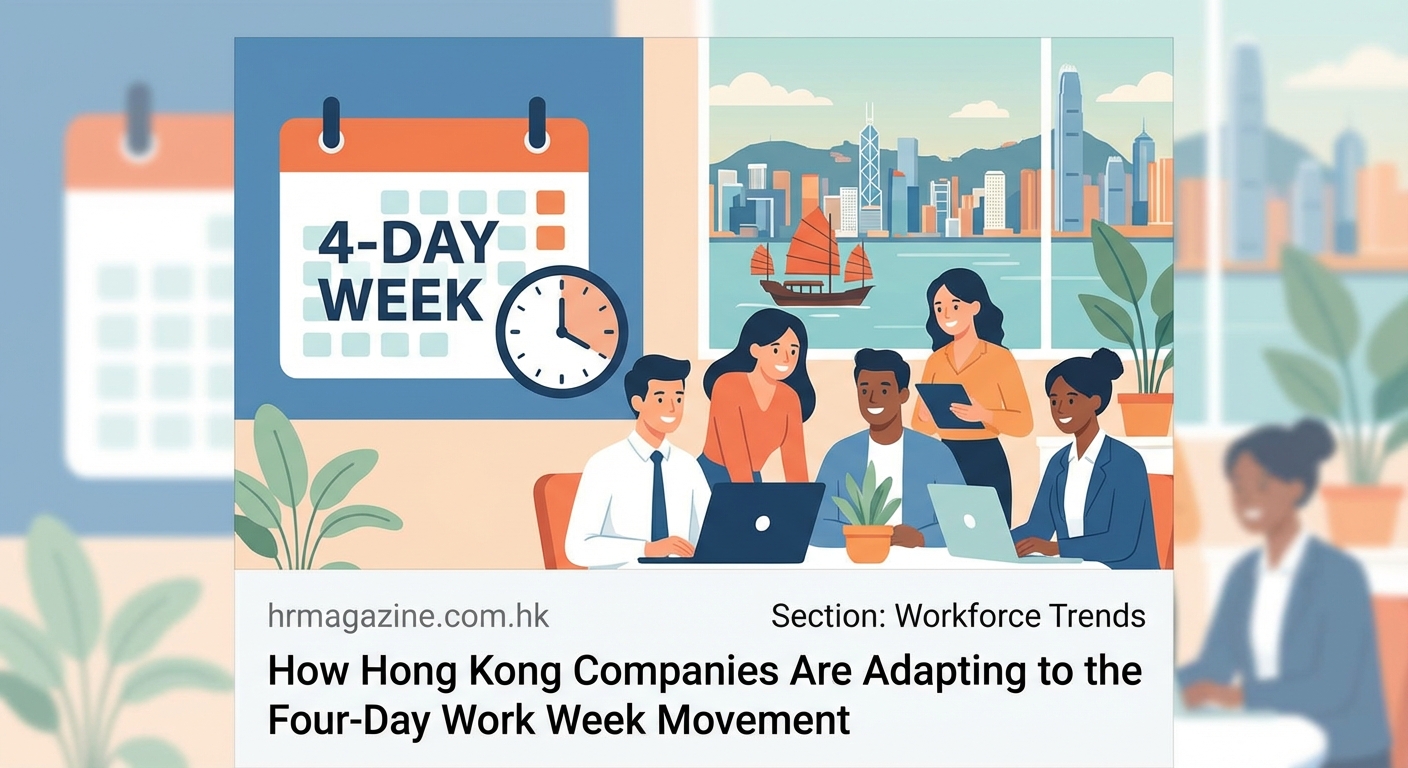
If you’re considering a trial, don’t announce it company-wide and hope for the best. Here’s a structured approach that minimizes risk:
-
Start with a single team or department. Choose a group with clear deliverables and measurable KPIs. Avoid customer-facing teams for your first pilot.
-
Set a fixed trial period. Three to six months gives you enough data without creating permanent expectations. Communicate that this is an experiment, not a policy change.
-
Define success metrics upfront. Track output quality, project completion rates, client satisfaction scores, and employee sentiment. Don’t rely on gut feeling.
-
Adjust workload expectations. You can’t just remove a day and expect the same meeting schedule. Cut low-value meetings, streamline approvals, and eliminate unnecessary reporting.
-
Plan for coverage. If you’re in a client-facing role, stagger days off across team members or establish clear handoff protocols. Building psychological safety helps teams support each other during transitions.
-
Collect feedback weekly. Don’t wait until the end of the trial to discover problems. Weekly check-ins help you adjust before issues compound.
The most successful pilots in Hong Kong share one trait: they treated the trial as a genuine experiment, not a PR stunt. Leadership bought in, teams had autonomy to redesign workflows, and everyone understood that failure was possible.
Legal and compliance considerations you can’t ignore
Hong Kong’s Employment Ordinance doesn’t explicitly address four day work weeks, which means HR teams need to be extra careful about documentation.
Salary calculations: If you’re moving to a true four day week with reduced hours, you need to clarify whether salary remains the same or adjusts proportionally. This affects MPF contributions, severance calculations, and statutory entitlements.
Rest days: The Ordinance requires at least one rest day per seven days. A four day work week doesn’t change this, but you need to clearly document which days count as rest days versus non-working days.
Overtime thresholds: If you’re compressing hours into four longer days, ensure you’re not inadvertently creating overtime obligations. The Ordinance doesn’t mandate overtime pay for most employees, but employment contracts often do.
Annual leave accrual: Statutory annual leave is based on length of service, not days worked per week. A four day week doesn’t reduce annual leave entitlements, but it may affect how employees use those days.
Statutory holidays: Employees are entitled to 12 statutory holidays regardless of their work schedule. Document how holidays falling on non-working days will be handled.
Working with legal counsel before launching a pilot saves headaches later. Common termination mistakes often stem from unclear employment terms, and the same risk applies to alternative work arrangements.
What employees actually want versus what companies offer
The disconnect between employee expectations and employer willingness creates tension in Hong Kong’s labor market.
What employees say they want:
– Full Fridays off with no reduction in pay
– Flexibility to choose which day they take off
– No increase in daily working hours
– Maintained career progression opportunities
– Clear boundaries around after-hours communication
What most Hong Kong employers are willing to offer:
– Compressed schedules with longer daily hours
– Alternate Fridays or half-days off
– Pilot programs limited to specific teams
– Performance-based eligibility
– Continued expectation of responsiveness outside core hours
This gap explains why four day work week adoption remains slow despite employee enthusiasm. Companies worry about competitive disadvantage, while employees see shorter weeks as table stakes for retention.
Why Hong Kong employees are quiet quitting often traces back to this mismatch between stated values around work-life balance and actual workplace policies.
The Singapore comparison everyone’s making
When Singapore announced new flexible work arrangement guidelines in late 2024, giving employees the right to request four day weeks, Hong Kong HR professionals took notice.
Singapore’s approach doesn’t mandate shorter weeks. It simply requires employers to consider requests and provide written reasons for refusals. This puts the conversation framework in place without forcing adoption.
Hong Kong has no equivalent regulation. Employees can request alternative arrangements, but employers face no obligation to consider them formally. This creates a more cautious environment where only progressive companies experiment.
The cultural differences matter too. Singapore’s government actively promotes productivity-driven work policies. Hong Kong’s government has remained neutral on work week length, focusing instead on statutory minimums around rest days and leave.
Some Hong Kong recruitment experts argue that Singapore’s move will create competitive pressure. If top talent can get four day weeks across the border, Hong Kong companies may need to match or risk losing people. Others point out that Hong Kong’s higher salaries and lower taxes still make it attractive despite longer hours.
Industry-specific realities you need to consider
Not every sector can adopt shorter work weeks equally. Here’s how different Hong Kong industries are approaching the conversation:
Technology and startups: Most open to experimentation. Smaller teams, project-based work, and competition for talent make four day weeks attractive. Why Hong Kong startups struggle with tech talent often comes down to benefits and flexibility.
Financial services: Deeply skeptical. Market hours, client demands, and regulatory requirements make coverage essential. Some teams test work-from-home Fridays, but true four day weeks remain rare.
Professional services (law, consulting, accounting): Billable hour models create structural barriers. A few boutique firms experiment with results-only approaches, but most stick to traditional schedules.
Retail and hospitality: Physical presence requirements make four day weeks impractical for most roles. Some companies test staggered schedules to improve work-life balance without reducing coverage.
Creative agencies: Early adopters in Hong Kong. Project deadlines and creative output lend themselves to compressed schedules. Client education remains the biggest hurdle.
Common mistakes that sink four day week trials
Watching Hong Kong companies stumble through pilots reveals predictable patterns. Avoid these errors:
Mistake 1: No workload adjustment. You can’t just remove a day and expect the same output without changing how work happens. Cut meetings, eliminate low-value tasks, and streamline processes first.
Mistake 2: Leadership skepticism. If senior management doesn’t believe it can work, they’ll unconsciously sabotage the trial through unrealistic expectations or passive-aggressive comments.
Mistake 3: Poor communication. Employees need to understand trial parameters, success criteria, and what happens if the experiment fails. Ambiguity breeds anxiety.
Mistake 4: Ignoring client impact. Your internal team might love the new schedule, but if clients can’t reach you when they need to, you’ll lose business.
Mistake 5: All-or-nothing thinking. Some roles can handle four day weeks better than others. Forcing uniformity creates unnecessary problems.
Mistake 6: No backup plan. What happens if the trial reveals serious issues? Having a clear exit strategy prevents teams from feeling trapped in a failing experiment.
The cost-benefit calculation HR needs to run
Before pitching a four day work week to your leadership team, build a business case grounded in Hong Kong market realities.
Potential benefits:
– Reduced turnover costs (replacing an employee costs 6-9 months of salary on average)
– Improved recruitment outcomes in competitive talent markets
– Lower burnout and sick leave usage
– Enhanced employer brand and PR value
– Possible productivity gains from increased focus
Potential costs:
– Additional hiring to maintain coverage
– Technology investments to improve collaboration
– Training costs to redesign workflows
– Risk of client dissatisfaction during transition
– Possible productivity drops if implementation fails
Run the numbers for your specific team. A customer service department with coverage requirements faces different economics than a product development team with project-based deliverables.
Employee recognition programs and benefits packages all compete for the same budget. A four day work week might deliver better ROI than other retention investments, or it might not. The data should drive the decision.
What’s next for shorter work weeks in Hong Kong
The four day work week movement in Hong Kong remains in early stages. Unlike the UK’s large-scale trials or New Zealand’s high-profile successes, Hong Kong adoption is happening quietly through individual company experiments.
Several factors could accelerate change:
Generational pressure: Younger workers increasingly prioritize flexibility over salary. As they move into decision-making roles, workplace norms will shift.
Regional competition: If Singapore, Japan, or South Korea see widespread adoption, Hong Kong companies may follow to remain competitive.
Economic pressure: The next recession could push companies to reduce hours instead of headcount, making four day weeks a cost-saving measure rather than a perk.
Technology enablement: Better collaboration tools and AI assistance could make compressed schedules more viable by automating low-value work.
For now, HR professionals should watch the experiments closely, collect data from early adopters, and prepare frameworks for potential trials. The question isn’t whether shorter work weeks will come to Hong Kong. It’s when, and in what form.
Making the shift work for your organization
The four day work week Hong Kong conversation isn’t really about days. It’s about rethinking productivity, challenging presenteeism, and building workplaces that respect human energy limits.
If you’re considering a trial, start small. Pick one team. Set clear metrics. Give it enough time to generate real data. And be honest about what you learn, even if it contradicts your initial assumptions.
The companies that succeed with shorter work weeks don’t just cut a day and hope for the best. They redesign how work happens, eliminate waste, and trust their teams to deliver results without micromanagement. That cultural shift matters more than the schedule itself.
Whether your organization is ready for a four day work week depends less on your industry and more on your willingness to question assumptions about how work gets done. The Hong Kong companies seeing success aren’t the ones with the easiest operational requirements. They’re the ones willing to experiment, learn, and adapt.