
Building Psychological Safety: The Missing Ingredient in Hong Kong’s High-Pressure Work Culture
Your finance team just lost another senior analyst. Exit interview? “Burnout.” But here’s what they didn’t say: they stopped speaking up in meetings three months ago because their manager shot down every suggestion. They watched colleagues get sidelined for raising concerns. They learned that silence was safer than honesty.
This isn’t an isolated incident. Across Hong Kong’s high-pressure corporate landscape, talented professionals are leaving not because of salary or benefits, but because they don’t feel safe to contribute their best thinking.
Psychological safety in the workplace Hong Kong remains critically low despite its proven impact on innovation and retention. When employees feel safe to speak up, challenge ideas, and admit mistakes without fear of punishment, teams perform better and turnover drops. Building this foundation requires deliberate leadership practices, structural changes to feedback systems, and cultural shifts that value learning over blame in Asia’s demanding business environment.
What psychological safety actually means in Hong Kong’s context
Psychological safety isn’t about being nice or avoiding difficult conversations. It’s the shared belief that team members won’t be punished or humiliated for speaking up with ideas, questions, concerns, or mistakes.
Harvard professor Amy Edmondson defined it as a climate where people feel comfortable being themselves. In Hong Kong’s hierarchical work culture, this concept faces unique challenges.
Traditional Asian business values often emphasize deference to authority and avoiding confrontation. Employees learn early to read the room and keep controversial opinions private. Managers interpret silence as agreement. Everyone nods in meetings, then nothing changes.
The cost shows up in three ways:
- Innovation stalls because junior staff won’t challenge flawed strategies
- Problems escalate because employees fear delivering bad news
- Top performers leave for companies where their voice matters
A 2023 survey of Hong Kong professionals found that 67% had withheld concerns about work processes in the past month. The most common reason? “It wouldn’t make a difference anyway.”
That resignation is expensive. When talented people mentally check out, your company loses more than productivity. You lose the insights that could prevent your next costly mistake.
Why Hong Kong companies struggle more than Western counterparts
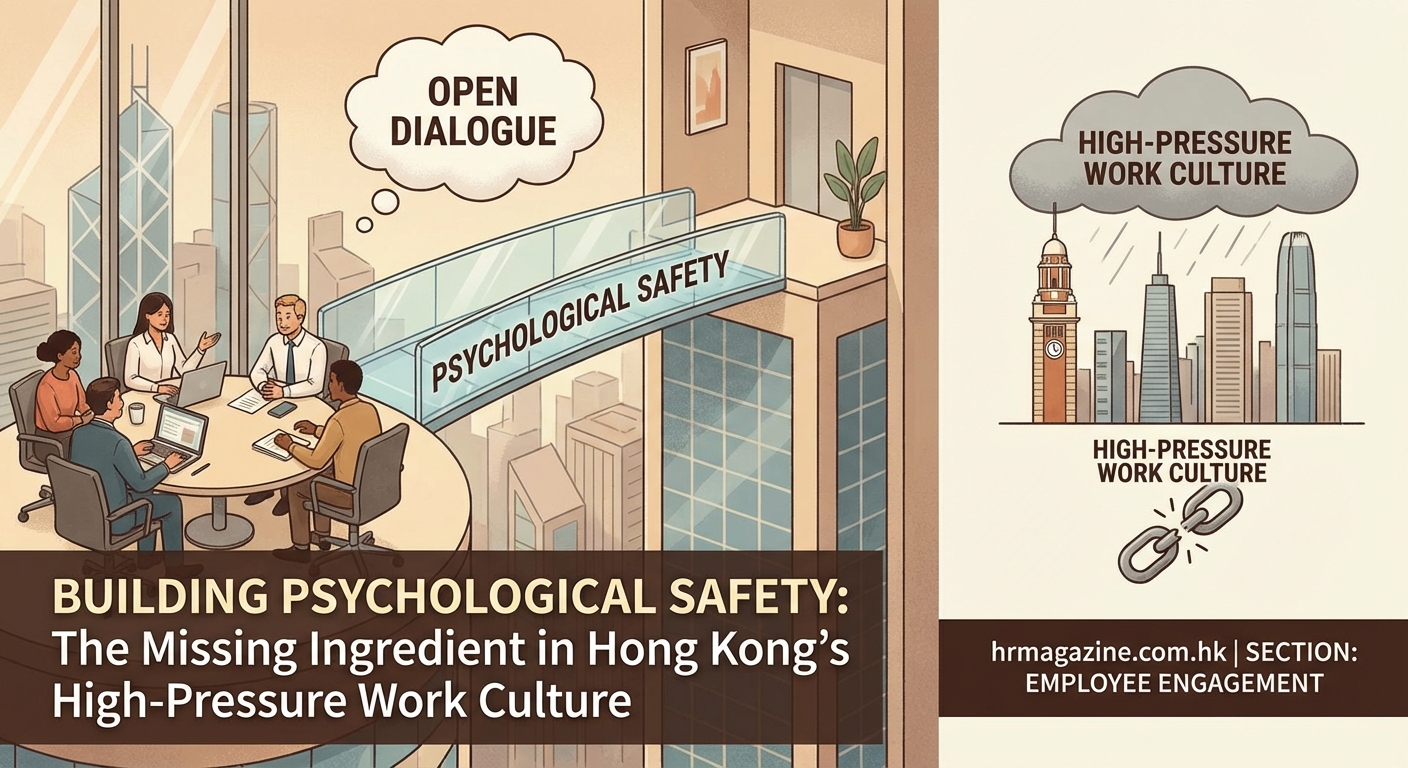
The cultural gap isn’t about East versus West. It’s about how power distance plays out in daily interactions.
In many Hong Kong offices, managers sit in separate areas. Executives have dedicated floors. The physical layout reinforces hierarchy before anyone speaks a word.
Compare this to tech companies in Singapore or Seoul that have deliberately flattened their structures. They’ve recognized that innovation requires collision, not separation.
Hong Kong’s long working hours compound the problem. When teams are exhausted, people default to self-preservation. Speaking up requires energy and courage. Staying quiet is easier.
The real estate and finance sectors show this pattern most clearly. Junior analysts work 70-hour weeks, then get criticized for not showing initiative. The contradiction is obvious to everyone except senior leadership.
“We kept saying we wanted honest feedback, but every time someone gave it, they were marked as ‘not a team player.’ People learned fast.” – Former HR Director at a Central district investment firm
Language adds another layer. In bilingual workplaces, employees may feel more confident expressing complex ideas in Cantonese but are expected to present in English. The cognitive load of translation makes people more cautious about what they say.
The business case that actually matters to Hong Kong executives
Forget the warm feelings. Here’s what psychological safety delivers in measurable terms.
Google’s Project Aristotle studied 180 teams and found psychological safety was the single most important factor in team effectiveness. Not talent. Not resources. Safety.
Teams with high psychological safety:
- Spot operational risks 47% faster
- Generate 23% more revenue per employee
- Experience 27% lower turnover
- Report 31% fewer sick days
For Hong Kong companies competing in tight talent markets, that last number alone justifies attention. The cost of replacing a mid-level professional runs between 150% and 200% of their annual salary.
Why Hong Kong startups are losing the war for tech talent often comes down to culture, not compensation. Candidates can sense psychological safety in interviews. They ask current employees real questions. Word spreads.
A local fintech company tracked this directly. After implementing psychological safety training for managers, their employee referral rate jumped from 12% to 34% in six months. Employees started actively recruiting their talented friends.
The pattern holds across industries. When people feel safe, they stay longer and bring others with them.
Four structural changes that build safety faster than training
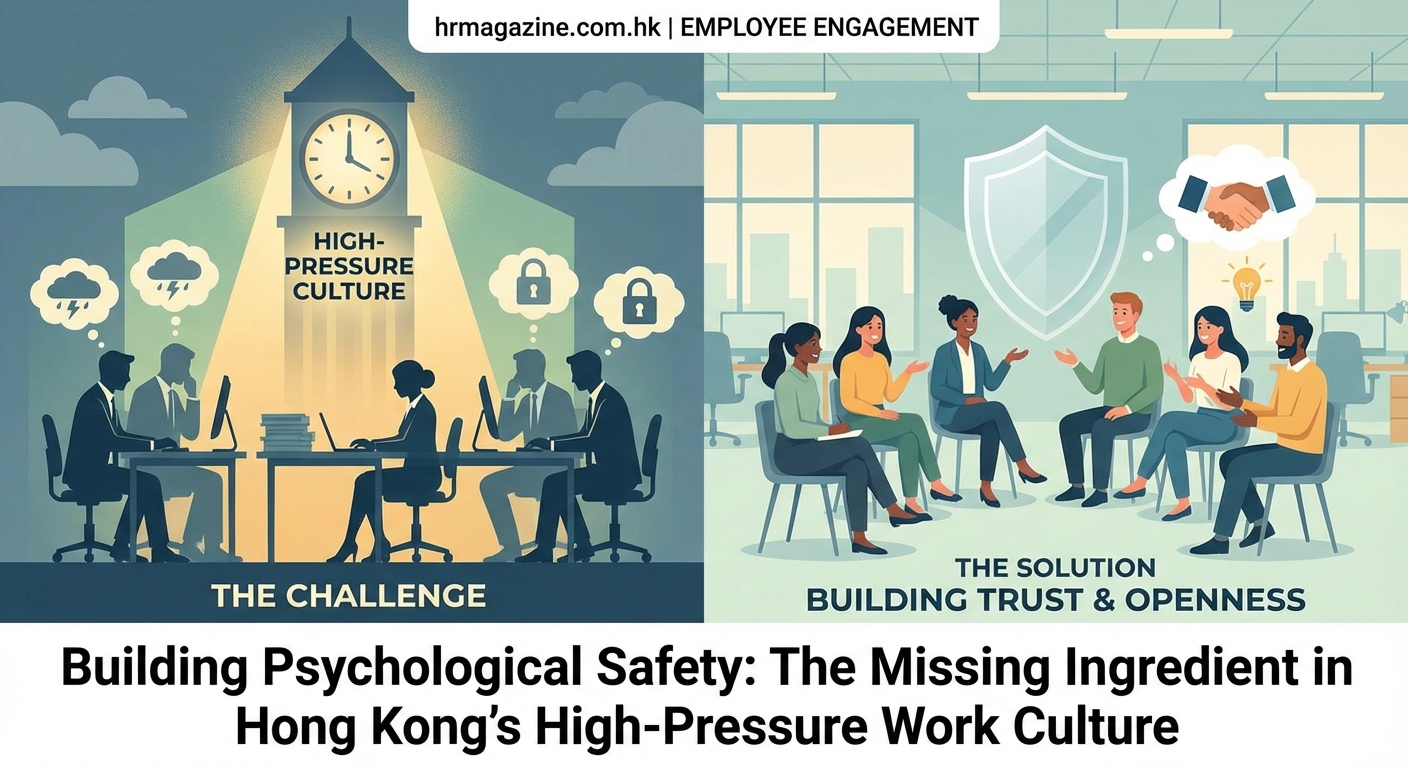
Training helps, but structure matters more. Here’s what actually shifts behavior.
1. Separate idea generation from idea evaluation
Most Hong Kong meetings mix brainstorming with criticism. Someone suggests an approach, and within seconds, three people explain why it won’t work.
Split these activities. Dedicate the first 15 minutes of strategy meetings to generating options without commentary. Write everything down. Then evaluate.
This simple change removes the social risk from contributing. Nobody’s idea gets shot down in real time.
2. Institutionalize “stupid question” moments
One professional services firm in Admiralty starts every client debrief with a round of “what didn’t we understand?” Each person must name something they found confusing.
Senior partners go first. They model intellectual humility by admitting gaps in their knowledge. This gives junior staff permission to do the same.
Within three months, the firm caught two major client misunderstandings before they became problems. The practice paid for itself immediately.
3. Track who speaks in meetings
Assign someone to count contributions. If the same three people dominate every discussion, you don’t have psychological safety. You have a small group making decisions while everyone else watches.
Share the data. When managers see that 70% of their team hasn’t spoken in the past four meetings, the problem becomes visible.
Some teams use a simple tracking method:
| Meeting Role | Responsibility | Frequency |
|---|---|---|
| Facilitator | Ensure balanced participation | Every meeting |
| Note-taker | Document decisions and questions | Every meeting |
| Contribution tracker | Count who speaks and how often | Weekly review |
| Follow-up owner | Close loops on raised concerns | Between meetings |
The tracker role rotates. Everyone experiences watching the participation patterns from the outside.
4. Reward messengers, not just solutions
A shipping company in Kwai Chung implemented a “early warning bonus” for employees who flagged potential problems before they escalated.
The bonus wasn’t large. But it sent a clear signal: we value people who speak up about risks, even if the risk doesn’t materialize.
Claims of safety violations increased 340% in the first quarter. Not because safety got worse, but because people finally felt safe reporting concerns.
The leader behaviors that matter more than policies
You can write all the psychological safety policies you want. If leaders don’t model specific behaviors, nothing changes.
Here are the five actions that Hong Kong employees watch for:
-
Admit your own mistakes publicly. When a project fails, start the debrief by acknowledging your contribution to the failure. This gives everyone else permission to be honest about theirs.
-
Ask genuine questions. Not rhetorical questions that hide criticism. Real questions where you don’t already know the answer. “What am I missing here?” works better than “Don’t you think we should…?”
-
Thank people for disagreeing. When someone challenges your idea, say “that’s a good point, I hadn’t considered that” before you respond. The acknowledgment matters more than whether you change your mind.
-
Never punish someone for being right. If an employee predicted a problem you ignored, and the problem happened, don’t get defensive. Apologize for not listening and ask them to flag concerns earlier next time.
-
Make your thinking visible. Explain why you made a decision, including what you’re uncertain about. Leaders who present decisions as obvious and final shut down dialogue.
A managing director at a Kowloon manufacturing firm started ending strategy presentations with “here’s what I’m most worried about with this plan.” Her team’s willingness to raise concerns doubled within weeks.
They weren’t suddenly braver. They were responding to a clear signal that concerns were welcome.
How to measure psychological safety without expensive consultants
You don’t need a complex assessment. Start with these seven questions in your next anonymous team survey:
- If you make a mistake on this team, is it held against you?
- Can team members bring up problems and tough issues?
- Do people on this team sometimes reject others for being different?
- Is it safe to take a risk on this team?
- Is it difficult to ask other team members for help?
- Would anyone on this team deliberately act in a way that undermines your efforts?
- Are your unique skills and talents valued and utilized?
Score each question from 1 (strongly disagree) to 7 (strongly agree). Reverse score the negative questions. Average the results.
Anything below 5.0 indicates serious problems. Between 5.0 and 6.0 suggests room for improvement. Above 6.0 means you’re doing well, but stay vigilant.
Run this quarterly. Track the trend, not just the absolute number. If scores drop, something changed. Find out what.
One Hong Kong retailer noticed psychological safety scores dropped sharply in their logistics team. Investigation revealed a new supervisor who publicly criticized mistakes. They addressed it immediately through coaching and reassignment.
The scores recovered within two months. More importantly, the logistics team’s error rate dropped because people started reporting problems early instead of hiding them.
Common mistakes Hong Kong managers make when building psychological safety
Even well-intentioned leaders stumble. Here are the patterns that undermine psychological safety efforts.
Mistake 1: Asking for feedback then getting defensive
You can’t ask people to be honest and then argue with everything they say. If you disagree with feedback, say “I appreciate you sharing that, let me think about it” and move on.
Mistake 2: Only valuing safety during designated times
Some managers run “open forum” sessions where all opinions are welcome, then return to command-and-control mode the rest of the week. People notice the inconsistency and trust neither version.
Mistake 3: Confusing psychological safety with low standards
Safety doesn’t mean avoiding accountability. You can hold people to high performance standards while still making it safe to discuss obstacles and ask for help. Common termination mistakes often stem from conflating the two concepts.
Mistake 4: Assuming silence means agreement
In Hong Kong’s culture of politeness, people rarely contradict superiors directly. If your team always agrees with you, that’s a warning sign, not a success metric.
Mistake 5: Treating psychological safety as an HR initiative
This isn’t something HR can fix with a training program. It requires daily behavior change from every manager. HR can support, but line leaders must own it.
Compare these common mistakes with effective approaches:
| What Doesn’t Work | What Actually Works |
|---|---|
| Annual engagement surveys with no follow-up | Monthly pulse checks with visible action on results |
| Open door policy without scheduled availability | Regular 1-on-1s with protected time |
| Asking “any questions?” at end of meetings | Building in discussion time throughout |
| Punishing mistakes publicly, praising privately | Discussing failures openly as learning moments |
| Treating all feedback as equally valid | Acknowledging input while maintaining standards |
The right column requires more effort. That’s why most organizations default to the left column and wonder why nothing improves.
What to do when psychological safety conflicts with hierarchy
This is the question that stops most Hong Kong leaders. How do you maintain necessary authority while building safety?
The answer: authority and safety aren’t opposites. They’re complementary.
Strong leaders make the final call after hearing all perspectives. Weak leaders either make decisions in isolation or let every decision become a democracy.
Psychological safety means people can challenge your thinking before you decide. It doesn’t mean they get to override your decision.
A useful framework:
- Clearly define which decisions are collaborative and which are yours alone
- For collaborative decisions, genuinely consider all input
- For your decisions, explain your reasoning and invite questions about your logic
- Once decided, expect full commitment regardless of initial disagreement
A property development firm in Tsim Sha Tsui uses this approach. The CEO makes final calls on major investments, but requires his team to present the strongest case against each proposal before he decides.
This “steelman” approach (the opposite of strawman) forces rigorous thinking. It also signals that challenging ideas is part of the job, not insubordination.
The result? Better decisions and a team that trusts the process even when their preferred option doesn’t win.
Building psychological safety with distributed and hybrid teams
Post-pandemic Hong Kong workplaces face a new challenge. How do you build safety when half the team works from home?
Remote work removes many informal signals. You can’t read body language in a video call the way you can in person. Side conversations that build trust don’t happen naturally.
Intentional practices fill the gap:
- Start every video meeting with a personal check-in round
- Use chat for real-time reactions during presentations
- Create dedicated channels for questions and concerns
- Schedule virtual coffee chats with no agenda
- Record meetings so people can review discussions they missed
The shipping company mentioned earlier found that remote employees reported higher psychological safety than office-based staff. Why? Digital communication removed some hierarchical cues. A junior analyst’s chat message looks the same as a senior manager’s.
They’ve now adopted hybrid practices that preserve this benefit while rebuilding in-person connection.
When to bring in outside help
Most psychological safety work happens internally. But three situations benefit from external support.
Situation 1: Trust has completely broken down
If employees don’t believe management will protect them, an internal initiative won’t work. A neutral third party can facilitate difficult conversations and rebuild credibility.
Situation 2: Leaders lack self-awareness
Sometimes managers genuinely don’t realize their behavior shuts people down. Candidate red flags that recruiters miss often include poor self-awareness. External coaches can provide feedback that internal HR can’t.
Situation 3: You need baseline data
Professional assessments provide benchmarking against other Hong Kong companies. This context helps executives understand whether their scores represent a crisis or normal growing pains.
The key is choosing the right kind of help. Avoid consultants who promise transformation through workshops alone. Look for practitioners who focus on behavior change and measurement.
Making psychological safety stick beyond the initial push
The pattern is predictable. Company launches psychological safety initiative. Enthusiasm runs high. Scores improve. Six months later, everyone’s back to old habits.
Sustainability requires embedding safety into existing systems:
- Add psychological safety metrics to manager performance reviews
- Include safety behaviors in promotion criteria
- Discuss safety in every leadership team meeting
- Celebrate examples of people speaking up and being heard
- Track leading indicators like question frequency, not just annual surveys
A professional services firm in Central made psychological safety part of their partner evaluation. Partners who scored poorly on team safety metrics, even with strong revenue numbers, didn’t advance.
The message was clear: we value how you lead, not just what you deliver.
Within 18 months, the firm’s retention of senior associates improved by 40%. They spent less time recruiting replacements and more time serving clients.
Why this matters for Hong Kong’s competitive position
Hong Kong competes globally for talent and investment. Companies that can’t create psychologically safe environments will lose both.
Mainland China graduates increasingly have options beyond Hong Kong. Should your company hire mainland China graduates depends partly on whether you can offer a work culture they value. Many seek environments where merit and ideas matter more than hierarchy.
Singapore and Seoul have invested heavily in workplace culture. Their tech sectors actively recruit Hong Kong talent by emphasizing collaborative, safe team environments.
If Hong Kong wants to remain a regional business hub, companies here need to match or exceed the psychological safety that top performers can find elsewhere.
This isn’t about copying Western practices. It’s about adapting universal principles of human performance to Hong Kong’s context.
The companies that figure this out first will have a significant advantage in the war for talent.
Starting your psychological safety journey this week
You don’t need a perfect plan. You need to start.
Pick one practice from this article and implement it this week. Maybe it’s the “stupid question” round in your next team meeting. Maybe it’s tracking who speaks. Maybe it’s publicly admitting a mistake you made.
Do that one thing consistently for a month. Notice what changes. Then add another practice.
Psychological safety isn’t built through grand gestures. It’s built through small, repeated actions that signal: your voice matters here, your concerns are valid, and speaking up makes you valuable, not vulnerable.
Your team is already noticing whether those signals are present. The only question is what message they’re receiving.