
Is Remote Work Dying in Hong Kong? What the Latest Data Reveals
The conversation around remote work in Hong Kong has shifted dramatically. What started as an emergency pandemic measure has evolved into a permanent fixture of employment negotiations, talent retention strategies, and workplace design decisions.
But here’s what the data actually shows: remote work isn’t dying in Hong Kong. It’s transforming.
Recent surveys show 80% of Hong Kong workers prefer hybrid or remote arrangements, yet many companies are mandating office returns. This disconnect creates retention risks and competitive disadvantages. HR leaders who design flexible policies backed by clear performance metrics will attract better talent, reduce turnover costs, and build more resilient teams in an increasingly competitive regional market.
What the latest numbers tell us about workplace flexibility
Morgan McKinley’s 2026 survey of Hong Kong professionals revealed a striking pattern. Four out of five employees want some form of remote or hybrid work. That’s not a small minority. That’s the overwhelming majority of your talent pool.
Yet company policies tell a different story.
Many organizations are pulling employees back to offices full time, citing collaboration needs and company culture concerns. The gap between what employers mandate and what employees prefer has never been wider.
This tension shows up in recruitment conversations daily. Candidates now ask about remote work policies in first interviews. Some decline offers purely based on inflexibility, even when compensation packages are competitive.
The question isn’t whether remote work will disappear. The question is which companies will adapt their policies to match market realities and which will lose talent to competitors who do.
How employee priorities have changed since 2019
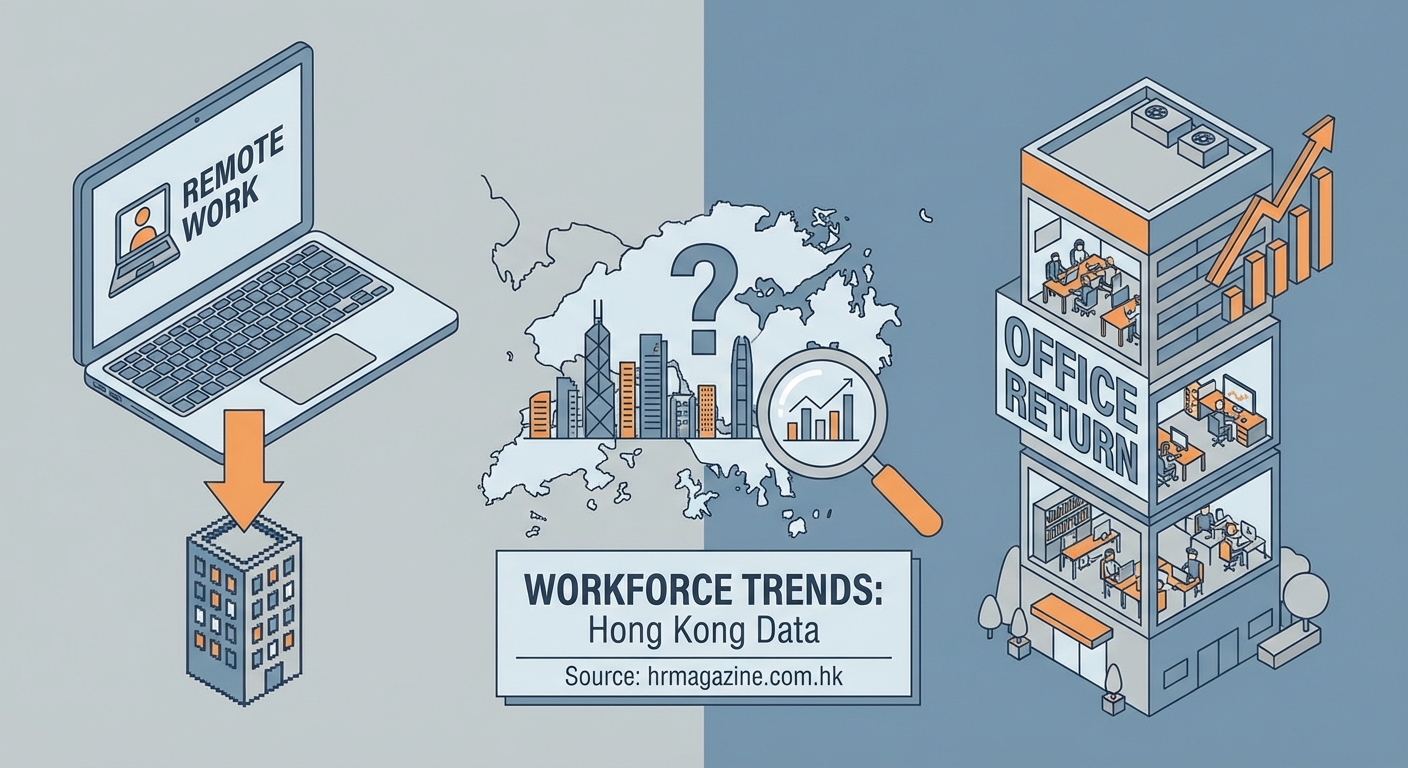
Before the pandemic, remote work in Hong Kong was rare outside specific industries like tech and creative services. Most professionals commuted to Central, Kowloon, or other business districts five days a week without question.
That baseline has permanently shifted.
A 2026 survey found 40% of Hong Kong workers would forgo a pay raise to maintain flexible work arrangements. Think about that trade-off. Employees are willing to sacrifice immediate financial gains for control over where and how they work.
This preference cuts across demographics:
- Parents value flexibility to manage school pickups and family obligations
- Young professionals prioritize work-life integration over office face time
- Mid-career employees appreciate reduced commute stress in a city with notoriously long travel times
- Senior staff want autonomy as a marker of trust and professional respect
The shift reflects deeper changes in how people evaluate job quality. Salary and benefits still matter, but flexibility has become a non-negotiable factor for many candidates.
Companies that treat remote work as a temporary concession rather than a permanent feature of modern employment will struggle to compete for talent. Why Hong Kong startups are losing the war for tech talent often comes down to inflexible policies that don’t match candidate expectations.
The hybrid model dominates Hong Kong workplaces
Pure remote work remains uncommon in Hong Kong compared to markets like Singapore or parts of mainland China. Instead, hybrid arrangements have become the default compromise.
Most hybrid policies follow one of three patterns:
-
Fixed schedule hybrid: Employees work from office on specific days (typically Tuesday through Thursday) and remotely on others. This model provides predictability for both managers and team members.
-
Flexible hybrid: Teams coordinate in-office days based on project needs, meetings, or collaboration requirements. Employees have autonomy to choose remote days within guidelines.
-
Role-based hybrid: Different positions have different flexibility levels based on job requirements. Client-facing roles might require more office presence while backend functions have more remote options.
Each approach has trade-offs. Fixed schedules simplify coordination but reduce individual autonomy. Flexible models increase satisfaction but require stronger communication systems. Role-based policies can create perceived inequities if not communicated clearly.
The most successful implementations share common elements. They set clear expectations about response times, meeting schedules, and deliverable standards. They invest in collaboration tools that work across locations. They measure performance based on outcomes rather than physical presence.
Where Hong Kong stands compared to regional markets
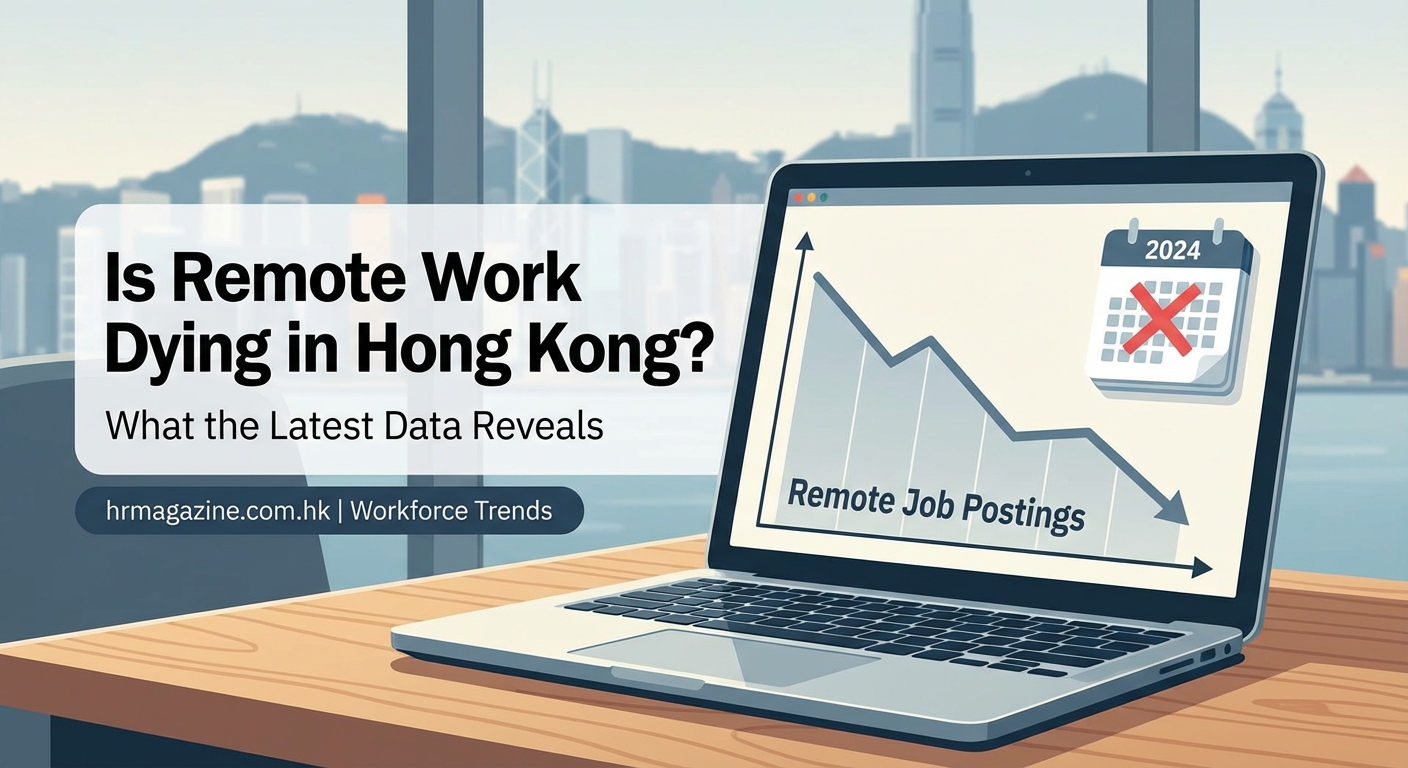
Singapore has emerged as the regional leader in remote work adoption. Government initiatives, strong digital infrastructure, and a highly educated workforce have created an environment where remote arrangements thrive.
Hong Kong lags slightly behind, but not due to infrastructure limitations. The city has world-class internet connectivity and a tech-savvy population. The gap comes from organizational culture and management mindsets.
Many Hong Kong companies still operate with hierarchical structures that equate visibility with productivity. Managers who grew up in office-centric environments struggle to adapt leadership styles for distributed teams.
This creates opportunity for forward-thinking organizations. Companies that genuinely embrace flexibility can differentiate themselves in talent markets. They can recruit from wider geographic pools. They can retain employees who might otherwise leave for lifestyle reasons.
The competitive advantage goes to organizations that solve the cultural challenges, not just the technical ones.
Common mistakes companies make with remote work policies
HR teams often stumble in predictable ways when designing flexibility programs. These errors create employee frustration and undermine the benefits that remote work should provide.
| Mistake | Why It Fails | Better Approach |
|---|---|---|
| Vague policy language | Employees don’t know what’s actually allowed | Document specific eligibility, approval processes, and expectations in writing |
| Inconsistent enforcement | Some managers allow flexibility while others don’t | Train all leaders on policy interpretation and create escalation paths for disputes |
| No performance metrics | Managers can’t evaluate remote workers fairly | Establish clear KPIs and outcome measures before allowing remote work |
| Missing technology support | Remote employees lack tools to collaborate effectively | Invest in video conferencing, project management, and communication platforms |
| One-size-fits-all rules | Policies don’t account for different role requirements | Customize approaches by department or function while maintaining fairness |
The technology mistakes are often easiest to fix. The cultural issues require sustained effort and leadership commitment.
Traditional management training falls short because it doesn’t prepare leaders to manage distributed teams. Many managers need new skills around asynchronous communication, trust-based oversight, and remote performance evaluation.
What HR leaders should do right now
If you’re responsible for workplace policies in Hong Kong, you face a decision point. You can resist remote work trends and risk talent loss, or you can design thoughtful flexibility programs that serve both business needs and employee preferences.
Here’s a practical implementation sequence:
-
Audit current state: Survey employees about their actual work patterns and preferences. Many people already work remotely informally. Understand what’s happening before you design policy.
-
Define business requirements: Identify which roles genuinely need office presence and which can function remotely. Be honest about this analysis. Many “office required” assumptions don’t hold up under scrutiny.
-
Pilot with willing teams: Start with departments that want flexibility and have supportive managers. Learn from these early adopters before scaling.
-
Set clear metrics: Define how you’ll measure success. Track productivity indicators, employee satisfaction scores, and retention rates for remote versus office workers.
-
Train managers extensively: Invest heavily in leadership development. Remote work fails when managers don’t know how to lead distributed teams effectively.
-
Iterate based on feedback: Treat your policy as a living document. Collect employee input quarterly and adjust based on what you learn.
-
Communicate transparently: Share the reasoning behind policy decisions. Employees accept constraints better when they understand the business logic.
This sequence takes time. Most organizations need six to twelve months to move from initial policy to mature implementation. Rushing the process creates problems that undermine employee trust.
“The companies that thrive in Hong Kong’s evolving talent market won’t be the ones with the most generous remote work policies. They’ll be the ones with the clearest expectations, the best communication systems, and the strongest culture of accountability regardless of location.”
Technology infrastructure that enables remote work success
Policy alone doesn’t make remote work function. You need supporting systems that allow distributed teams to collaborate effectively.
The technology stack for successful remote work includes several layers:
Communication platforms: Tools like Slack, Microsoft Teams, or similar systems that enable real-time messaging, file sharing, and informal conversation. These replace the hallway chats and desk drop-bys that happen naturally in offices.
Video conferencing: Zoom, Google Meet, or other video tools that support face-to-face interaction. Video quality matters more than most companies realize. Poor connections and awkward interfaces create friction that discourages use.
Project management: Systems like Asana, Monday, or Jira that make work visible across locations. Remote teams need shared visibility into who’s working on what and project status.
Document collaboration: Google Workspace, Microsoft 365, or similar platforms that allow simultaneous editing and version control. Email attachments don’t work for distributed teams.
Security infrastructure: VPNs, multi-factor authentication, and endpoint protection that safeguard company data when employees work from various locations.
Many Hong Kong companies already have these tools but use them poorly. The technology exists. The challenge is adoption and effective use.
Cloud-based HRIS systems that comply with privacy requirements become especially important when HR teams need to manage distributed workforces across multiple locations.
How to measure remote work effectiveness
You can’t manage what you don’t measure. Remote work programs fail when organizations can’t demonstrate their business impact.
Effective measurement tracks multiple dimensions:
Productivity metrics: Compare output before and after remote work implementation. Use role-specific measures like sales numbers, projects completed, customer satisfaction scores, or code commits depending on the function.
Employee satisfaction: Survey workers about their experience with remote arrangements. Track engagement scores, stress levels, and work-life balance perceptions.
Retention data: Monitor turnover rates for employees with different work arrangements. Calculate the cost savings from reduced attrition.
Recruitment metrics: Measure how remote work policies affect your ability to attract candidates. Track offer acceptance rates and time-to-fill for positions with different flexibility levels.
Collaboration indicators: Assess whether teams maintain effective communication. Monitor meeting participation, project completion rates, and cross-functional initiative success.
Cost analysis: Calculate real estate savings, technology costs, and other financial impacts. Remote work often reduces office space needs but increases technology spending.
The measurement framework should be in place before you scale remote work programs. Baseline data from the pilot phase helps you demonstrate ROI to skeptical executives.
Some organizations discover that remote work improves productivity. Others find it’s neutral. Very few see significant declines when programs are well designed.
Addressing the retention challenge in flexible workplaces
Hong Kong faces a talent retention crisis that predates remote work debates. The city’s competitive job market, high cost of living, and regional opportunities create constant turnover pressure.
Flexible work arrangements have become a retention tool, not just a recruitment perk. Employees who value their current flexibility are less likely to explore other opportunities.
The retention impact shows up most clearly in specific demographics. Parents with school-age children particularly value flexibility. Professionals with long commutes from New Territories or outlying islands appreciate reduced travel time. Employees managing elderly parent care need schedule control.
These aren’t edge cases. They represent substantial portions of Hong Kong’s workforce.
Companies that remove flexibility often see immediate attrition. Employees who’ve experienced remote work don’t easily return to five-day office mandates. They’ll search for employers who trust them to work effectively from any location.
The cost of replacing a skilled employee in Hong Kong typically ranges from 50% to 200% of annual salary depending on role and seniority. Those replacement costs make retention through flexibility programs financially compelling.
Employee recognition programs that work in hybrid settings help maintain culture and connection even when teams aren’t physically together every day.
The compliance landscape for remote work arrangements
Hong Kong employment law doesn’t specifically address remote work, which creates both flexibility and uncertainty for HR teams.
Existing regulations around working hours, overtime, rest days, and statutory leave all still apply regardless of work location. Employers can’t use remote arrangements as justification to ignore these requirements.
Several compliance areas need particular attention:
Employment contracts: Update contracts to specify remote work terms, including eligible locations, equipment provisions, expense reimbursement, and performance expectations. Vague contracts create disputes later.
Work hours tracking: Maintain systems to record actual hours worked for non-exempt employees. Remote work doesn’t eliminate overtime obligations.
Occupational safety: Employers have duty of care for employee safety even in home offices. This includes ergonomic assessments and equipment provision.
Data protection: Remote work increases data security risks. Ensure compliance with Hong Kong’s Personal Data Privacy Ordinance when employees access customer or employee information from home.
Tax implications: Cross-border remote work can create tax complications. Employees working from mainland China or other jurisdictions may trigger tax obligations in multiple locations.
Insurance coverage: Verify that workers’ compensation and other insurance policies cover remote work injuries and incidents.
Employment contract compliance becomes more complex when work arrangements vary across your employee base.
The safest approach is documenting everything. Written policies, signed acknowledgments, and clear procedures protect both employer and employee interests.
Building culture when teams are distributed
The hardest part of remote work isn’t technology or policy. It’s maintaining organizational culture when people aren’t together daily.
Hong Kong companies often have strong in-office cultures built around shared meals, after-work gatherings, and informal mentorship. These elements don’t translate automatically to remote environments.
Successful distributed teams intentionally recreate culture through designed experiences:
Virtual social events: Online coffee chats, trivia competitions, or lunch-and-learns that provide non-work interaction. These work best when participation is optional and timing is convenient.
In-person gatherings: Quarterly or monthly team meetings where everyone comes together for strategic planning, relationship building, and celebration. These become more valuable when they’re less frequent.
Mentorship programs: Structured pairing of senior and junior employees with regular check-ins. Informal mentorship happens naturally in offices but needs formal support remotely.
Recognition rituals: Public acknowledgment of achievements through digital channels. Remote workers miss the casual praise that happens in office hallways.
Onboarding experiences: Enhanced orientation for new hires who join remote teams. First impressions matter even more when people can’t rely on daily office interaction to build relationships.
The culture challenge is real, but it’s solvable. It requires intention, investment, and consistency. Organizations that treat culture as an afterthought in remote arrangements see engagement decline.
Building psychological safety matters even more in distributed teams where people can’t read body language or pick up on subtle social cues as easily.
What employees actually want from flexibility programs
Employee surveys reveal consistent patterns in what workers value about remote arrangements. Understanding these priorities helps HR teams design programs that actually meet needs.
Top employee priorities include:
Autonomy over schedule: The ability to shift work hours slightly to accommodate personal needs like medical appointments or school events. This matters more than working from home every day.
Reduced commute burden: Hong Kong’s average commute exceeds 45 minutes each way. Eliminating even two days of commuting per week saves employees substantial time and stress.
Quiet work environment: Open office layouts make focused work difficult. Home offices provide concentration that many employees can’t find in busy offices.
Family time: Both parents and adult children caring for elderly family members value flexibility to manage responsibilities without sacrificing career progression.
Trust signal: Remote work permission communicates that employers trust employees to manage their own productivity. This psychological element matters as much as practical benefits.
Cost savings: Working from home reduces spending on transportation, meals, and work clothing. These savings add up significantly in expensive Hong Kong.
Notice what’s missing from this list: employees don’t primarily want remote work to slack off or avoid colleagues. The motivations are practical and reasonable.
Programs designed around these actual priorities perform better than policies based on assumptions about what employees want.
The future landscape for Hong Kong workplaces
Remote work trends in Hong Kong will continue evolving over the next several years. Several forces will shape that evolution.
Regional competition: As Singapore, mainland Chinese cities, and other Asian markets embrace flexibility, Hong Kong companies will face pressure to match or exceed those offerings to remain competitive for talent.
Technology advancement: Improved virtual reality, better collaboration tools, and enhanced remote work platforms will make distributed work more seamless and effective.
Real estate economics: High commercial rent in Hong Kong creates financial incentive for companies to reduce office footprints. This economic pressure will drive more flexible arrangements.
Generational shifts: Younger workers entering the market have different expectations about workplace flexibility. As they become larger portions of the workforce, their preferences will influence standard practices.
Talent shortages: Hong Kong faces demographic challenges and skilled worker shortages in many sectors. Flexibility becomes a competitive necessity when talent is scarce.
The trajectory points toward more flexibility, not less. Companies resisting this trend will find themselves at a disadvantage.
The organizations that thrive will be those that view remote work not as a perk to be grudgingly granted but as a strategic capability that enables better talent attraction, retention, and productivity.
Making remote work succeed in your organization
Remote work trends in Hong Kong reflect broader changes in how professionals think about work, career, and life balance. The data shows clear employee preferences for flexibility. The business case supports well-designed remote programs. The technology exists to enable effective distributed collaboration.
What’s often missing is organizational commitment to making it work.
Successful remote work programs require investment in training, technology, and culture building. They need clear policies, consistent enforcement, and ongoing measurement. They demand that leaders trust employees and evaluate performance based on results rather than presence.
For HR professionals, this represents both challenge and opportunity. You can lead your organization through this transition, building workplace practices that attract better talent and create competitive advantage. Or you can resist the trend and watch your best people leave for companies that offer the flexibility they want.
The choice is yours. The data is clear. The path forward requires courage to challenge traditional assumptions about how work gets done.
Start with small pilots. Measure carefully. Learn from what works and what doesn’t. Adjust based on evidence rather than opinion. And remember that the goal isn’t remote work for its own sake. The goal is building an organization where talented people want to work and can do their best work, regardless of location.