
Why Traditional Management Training Falls Short in Hong Kong’s Hybrid Work Era
More than half of Hong Kong’s workforce would quietly quit if denied flexible work arrangements. That’s not a prediction. It’s happening right now across Central, Kowloon, and the New Territories. The shift to hybrid work wasn’t a smooth transition. It was a forced experiment that exposed cracks in how we manage people, measure productivity, and maintain company culture when teams split between home offices and corporate towers.
Hong Kong employers face unique hybrid work challenges including productivity measurement gaps, regulatory compliance uncertainty, technology infrastructure costs, and cultural resistance. Success requires data-driven policies, manager retraining, proper tech investment, and addressing quiet quitting through genuine flexibility. Organizations that adapt these systems retain talent while competitors struggle with turnover and engagement.
The productivity measurement crisis nobody talks about
Traditional performance metrics collapsed when employees stopped sitting at visible desks.
Hong Kong managers trained to evaluate presence rather than output suddenly lost their primary assessment tool. Walking past someone’s desk at 7 PM no longer signals dedication. Seeing an empty chair at 2 PM doesn’t mean someone’s slacking.
The problem runs deeper than appearances.
Most Hong Kong companies still use annual reviews designed for office-based work. These systems measure face time, meeting attendance, and observable hustle. They fail spectacularly in hybrid environments where your best performer might work from a Sai Kung cafe on Tuesdays.
Here’s what actually drives productivity in hybrid settings:
- Clear deliverable definitions with measurable outcomes
- Weekly check-ins focused on progress, not presence
- Transparent project management systems everyone can access
- Outcome-based KPIs that work regardless of location
- Regular feedback loops that catch problems early
The shift requires retraining every manager in your organization. That’s expensive. That’s uncomfortable. That’s also non-negotiable if you want to compete for talent in 2026.
Technology infrastructure gaps creating two-tier workforces
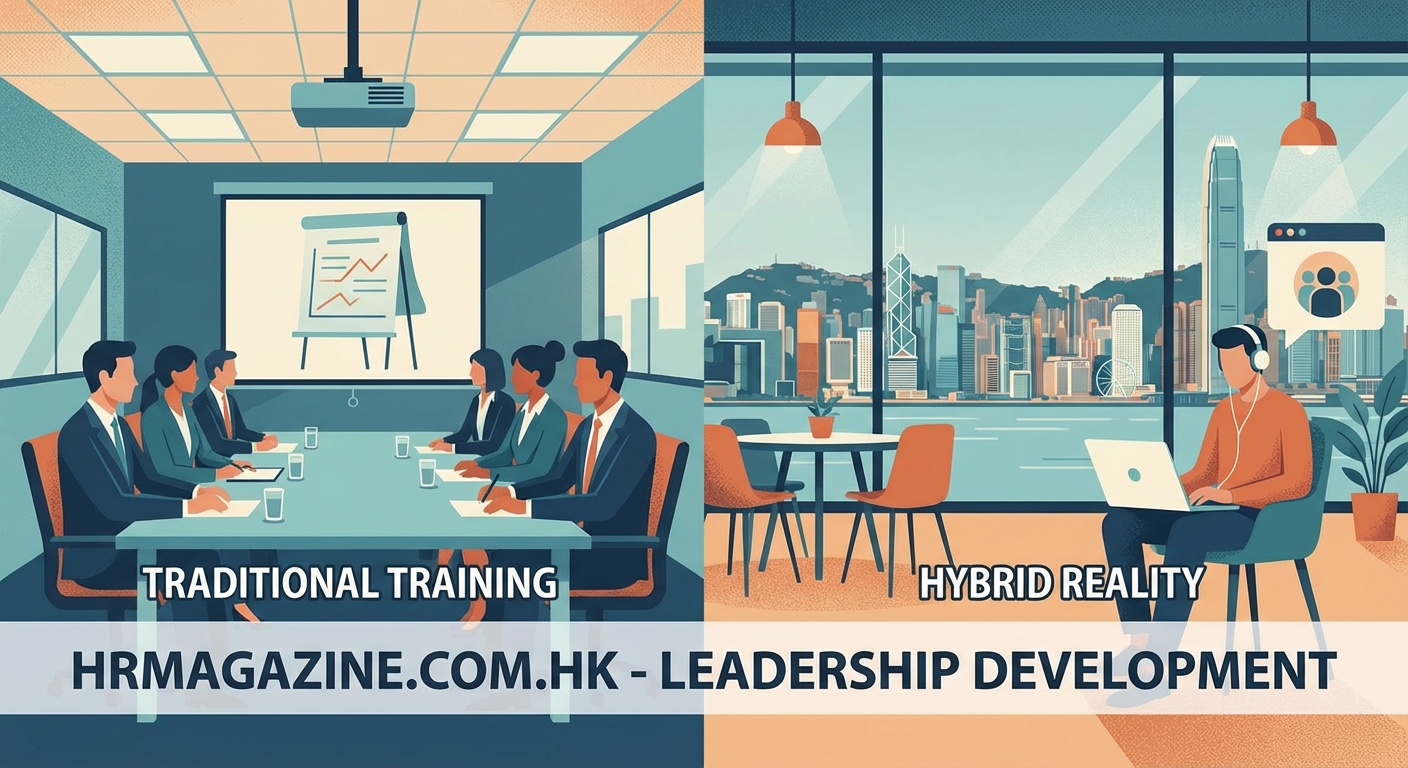
Your office has gigabit internet, dual monitors, and ergonomic chairs.
Your employee’s Mong Kok apartment has spotty WiFi, a laptop balanced on a kitchen table, and neighbors drilling through concrete walls at random intervals.
This disparity creates performance gaps that look like competence issues but are actually infrastructure problems. The employee struggling with video calls isn’t incompetent. They’re fighting against a 15Mbps connection shared with three family members.
Smart Hong Kong employers are addressing this through:
- Technology stipends covering home office equipment
- Co-working space memberships for employees without suitable home environments
- Upgraded VPN infrastructure that actually works under load
- Cloud-based systems replacing on-premise tools that require office network access
- Regular technology audits identifying and fixing remote work barriers
Why Hong Kong employees are quiet quitting and what HR can do about it often traces back to these unaddressed infrastructure gaps. Employees feel unsupported, then disengage.
The cost of fixing infrastructure is real. The cost of losing talent to competitors who did fix it is higher.
Compliance nightmares in cross-border hybrid arrangements
Hong Kong’s position as a regional hub creates unique complications.
Your employee works from home in Hong Kong on Monday. They’re visiting family in Shenzhen on Wednesday. They took a workation in Singapore last month. Each location triggers different tax, labor law, and data privacy obligations.
Most HR teams aren’t equipped to handle this complexity.
| Compliance Area | Office-Based Challenge | Hybrid Work Challenge | Risk Level |
|---|---|---|---|
| Work Hours Tracking | Simple timeclock system | Multiple timezones, flexible schedules | Medium |
| Data Privacy | Controlled office network | Home networks, public WiFi, VPNs | High |
| Tax Obligations | Single jurisdiction | Multiple work locations | High |
| Insurance Coverage | Office premises only | Home office, co-working spaces | Medium |
| Equipment Liability | Company property on-site | Company assets in homes | Low |
The regulatory landscape keeps shifting. How Hong Kong’s new statutory paternity leave rules will impact your 2025 HR budget demonstrates how quickly employment law evolves. Hybrid work adds layers of complexity to already complicated compliance requirements.
You need clear policies addressing:
- Maximum days employees can work outside Hong Kong annually
- Approval processes for temporary location changes
- Data handling requirements for remote work
- Equipment security protocols for home offices
- Insurance coverage for various work locations
Document everything. Update policies quarterly. Train managers on enforcement.
The manager training gap nobody wants to fund
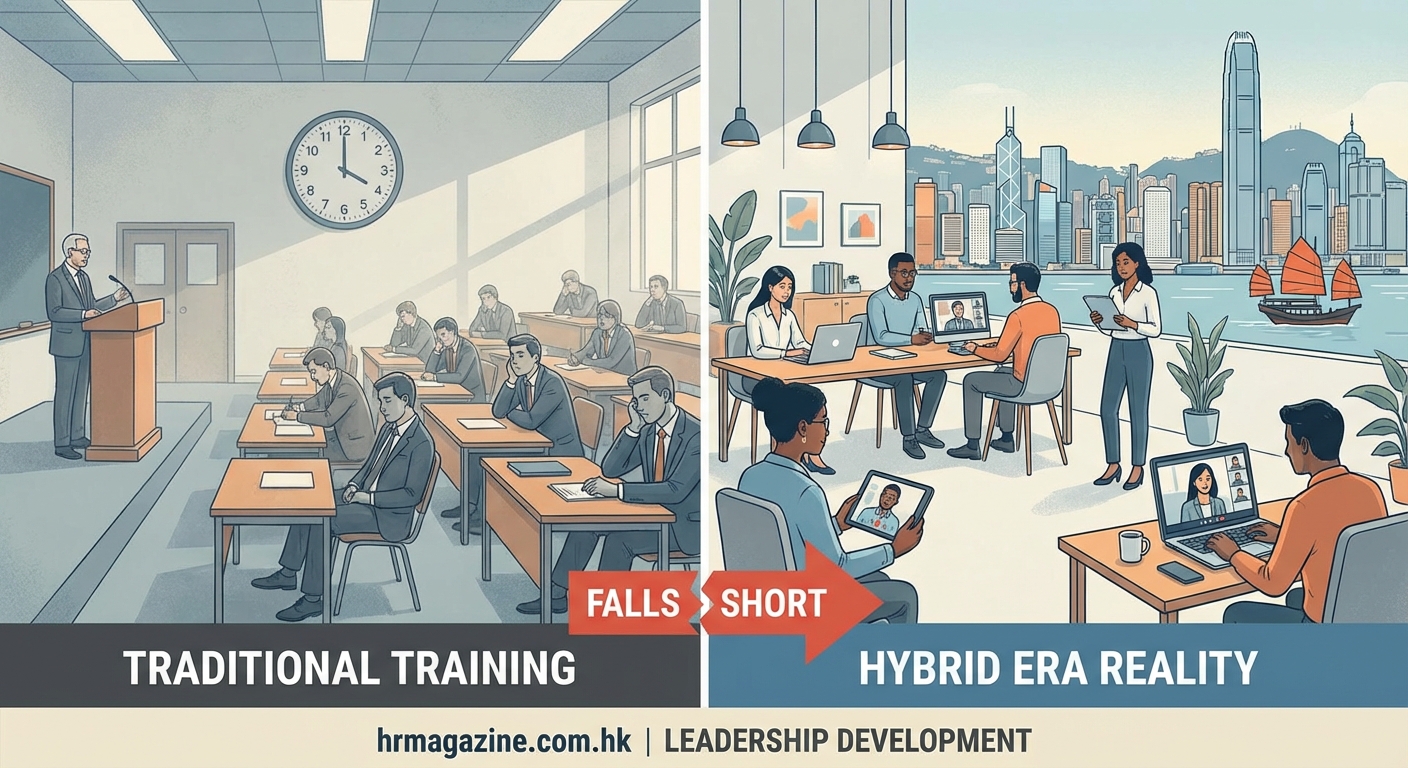
Your managers learned leadership in offices.
They absorbed management techniques through observation, mentorship, and trial-and-error in physical spaces. Those skills don’t automatically transfer to hybrid environments where half the team exists as video thumbnails.
The gap shows up in predictable ways:
Managers schedule unnecessary meetings because they can’t see people working. They micromanage remote workers while ignoring in-office employees. They create arbitrary office attendance rules that drive talent toward competitors offering genuine flexibility.
“The biggest mistake Hong Kong companies make is assuming good office managers automatically become good hybrid managers. They’re related but distinct skill sets. You wouldn’t expect a great basketball coach to excel at coaching swimming without additional training.”
Effective hybrid management requires specific training in:
- Asynchronous communication that respects different schedules
- Building team cohesion without physical proximity
- Recognizing and addressing remote worker isolation
- Managing performance through outcomes rather than observation
- Facilitating collaboration across distributed teams
How AI-powered recruitment tools are reducing time-to-hire in Hong Kong’s competitive market matters because you’re competing for talent with companies that have already solved these management challenges. Candidates interview with multiple firms. They notice which organizations have competent hybrid leadership.
Cultural resistance masquerading as business necessity
Some Hong Kong executives genuinely believe hybrid work damages productivity.
Others use that belief to justify their discomfort with change.
The resistance often sounds like business logic. “Our culture requires face-to-face interaction.” “Collaboration suffers when people work remotely.” “Junior employees need in-person mentorship.”
These concerns aren’t always wrong. They’re often exaggerated to avoid addressing the real issue: leadership trained for one work model facing pressure to master another.
The companies thriving in Hong Kong’s hybrid environment share common traits:
- Leadership that models flexible work rather than demanding office presence from others
- Metrics proving hybrid arrangements maintain or improve productivity
- Investment in tools and training supporting distributed collaboration
- Honest assessment of which roles genuinely require office presence
- Willingness to lose employees who can’t adapt to flexibility
Cultural change starts at the top. If your C-suite demands full-time office presence while allowing everyone else flexibility, you’re signaling that hybrid work is for less important people. That message kills engagement faster than any policy.
The quiet quitting connection driving turnover
Fifty-seven percent of Hong Kong employees would quietly quit without hybrid options.
That statistic from recent workforce studies should terrify every HR leader. Quiet quitting costs more than obvious turnover because disengaged employees stay on payroll while contributing minimum effort.
The pattern looks like this:
An employee requests hybrid arrangements. Management denies the request citing vague concerns about collaboration or culture. The employee stops volunteering for projects, contributing ideas, or going beyond minimum requirements. Productivity drops. Management blames the employee’s attitude rather than examining the policy that created it.
Companies serious about retention are implementing:
- Formal hybrid work policies with clear eligibility criteria
- Trial periods allowing employees to demonstrate remote productivity
- Regular surveys measuring engagement across work locations
- Manager accountability for maintaining team morale in hybrid settings
- Career development paths that don’t penalize remote workers
Why Hong Kong startups are losing the war for tech talent and how to fight back often comes down to flexibility. Startups offering genuine hybrid options compete successfully against larger firms with better pay but rigid attendance policies.
Data privacy complications in distributed environments
Hong Kong’s privacy ordinance wasn’t written for hybrid work.
The law assumes company data stays within controlled office environments. Hybrid work scatters sensitive information across home networks, personal devices, and public WiFi connections.
Most companies address this through technology rather than policy. VPNs, encrypted connections, and cloud security tools help. They don’t solve the human factor.
Your employee takes a video call from a coffee shop in Causeway Bay. Their screen is visible to everyone behind them. Someone photographs confidential information displayed during the meeting. Your security protocols just failed because nobody thought about physical surroundings during remote work.
Practical privacy protection requires:
- Clear guidelines on acceptable work locations for sensitive tasks
- Privacy screens for all remote workers handling confidential data
- Regular security training covering hybrid work scenarios
- Incident reporting systems catching breaches early
- Device management ensuring security updates happen consistently
5 cloud-based HRIS systems that actually comply with Hong Kong’s privacy ordinance becomes critical when employee data needs access from multiple locations. The wrong system creates compliance nightmares.
Real estate decisions with long-term consequences
Hong Kong office space costs more per square foot than almost anywhere globally.
Hybrid work offers obvious opportunities to reduce real estate expenses. Smaller offices. Hoteling systems. Shared desk arrangements.
The math looks attractive until you consider what you’re actually optimizing.
Cutting office space too aggressively leaves you with overcrowded facilities when everyone shows up on the same days. Employees fight for meeting rooms. Desks fill up by 9 AM. The office becomes a place people avoid rather than a collaboration hub.
Smart real estate strategies for hybrid work include:
- Maintaining enough space for 60-70% capacity rather than 100%
- Redesigning offices for collaboration rather than individual work
- Creating different zones for focused work, meetings, and social interaction
- Investing in booking systems preventing overcrowding
- Keeping flexibility to expand if hybrid policies change
The companies struggling most made aggressive cuts during the pandemic, then faced expensive expansions when return-to-office mandates failed. The companies thriving took measured approaches allowing adjustment as hybrid work patterns stabilized.
Building team cohesion when people rarely meet
Company culture doesn’t happen automatically.
It requires intentional effort, repeated interactions, and shared experiences. Hybrid work makes all three harder.
Your team members might work together for months without meeting face-to-face. They collaborate on projects through Slack messages and Zoom calls but never share a meal, celebrate a win in person, or have the random hallway conversations that build relationships.
The result feels transactional. People complete tasks but don’t develop loyalty to teams or organizations.
Effective solutions go beyond mandatory fun:
- Regular in-person gatherings with clear purposes beyond “team building”
- Structured onboarding ensuring new hires meet key colleagues face-to-face
- Social channels for non-work conversation without forced participation
- Recognition systems that work for remote and office workers equally
- Leadership visibility across all work locations
Should your organization invest in employee experience platforms in 2024 addresses tools helping maintain culture in distributed environments. Technology helps. It doesn’t replace thoughtful culture design.
The performance review system that hybrid work broke
Annual reviews assume consistent observation over twelve months.
Hybrid work eliminates that assumption. Managers see some employees regularly in the office. Others appear primarily as video thumbnails. The difference creates bias even in well-intentioned evaluations.
Research consistently shows remote workers receive lower performance ratings for identical work. The bias isn’t conscious. It’s a natural result of visibility differences.
Fixing this requires systematic changes:
| Traditional Review Element | Hybrid Work Problem | Solution |
|---|---|---|
| Manager observation | Inconsistent visibility across locations | Structured documentation of achievements |
| Peer feedback | Office workers interact more frequently | Formal 360 reviews from cross-location colleagues |
| Project contributions | Remote work less visible | Public recognition systems tracking all contributions |
| Development discussions | Happen informally in offices | Scheduled career conversations for all employees |
| Promotion decisions | Favor visible office workers | Blind review processes focusing on outcomes |
The goal isn’t treating everyone identically. It’s ensuring location doesn’t determine career trajectory.
Making hybrid work actually work for your organization
Hong Kong’s hybrid work challenges won’t disappear.
They’ll evolve as technology improves, regulations change, and workforce expectations shift. The companies that thrive will be those treating hybrid work as a permanent operating model requiring continuous optimization rather than a temporary accommodation.
Start with honest assessment. Which hybrid challenges affect your organization most severely? Where are employees struggling? What’s driving turnover?
Then prioritize fixes based on impact. You can’t solve everything simultaneously. You can address the problems costing you the most talent and productivity right now.
The organizations winning Hong Kong’s talent war aren’t those with the biggest budgets or the flashiest offices. They’re the ones that figured out how to make hybrid work genuinely work for everyone involved. Your competitors are already making these changes. The question is whether you’ll adapt fast enough to keep up.